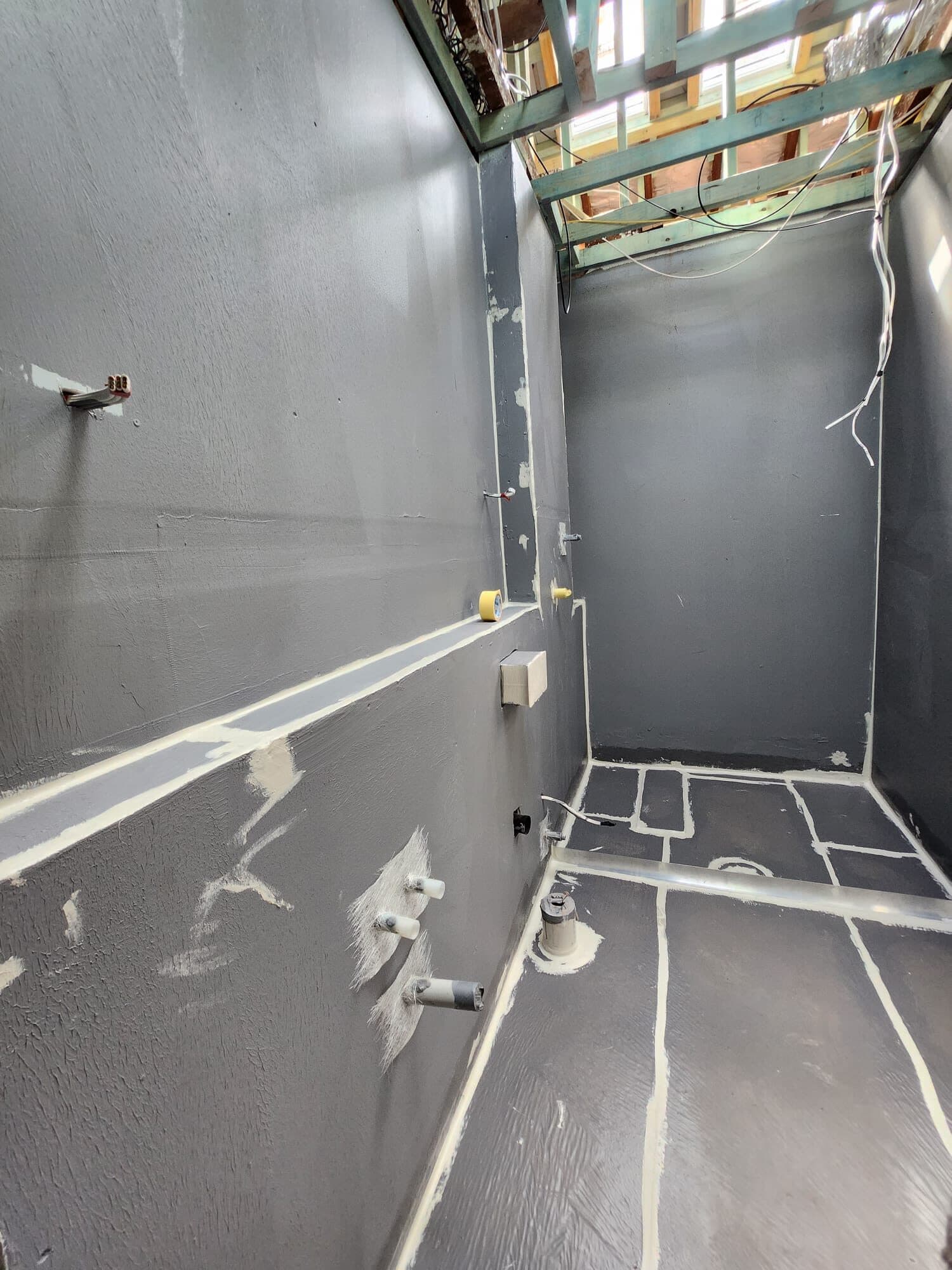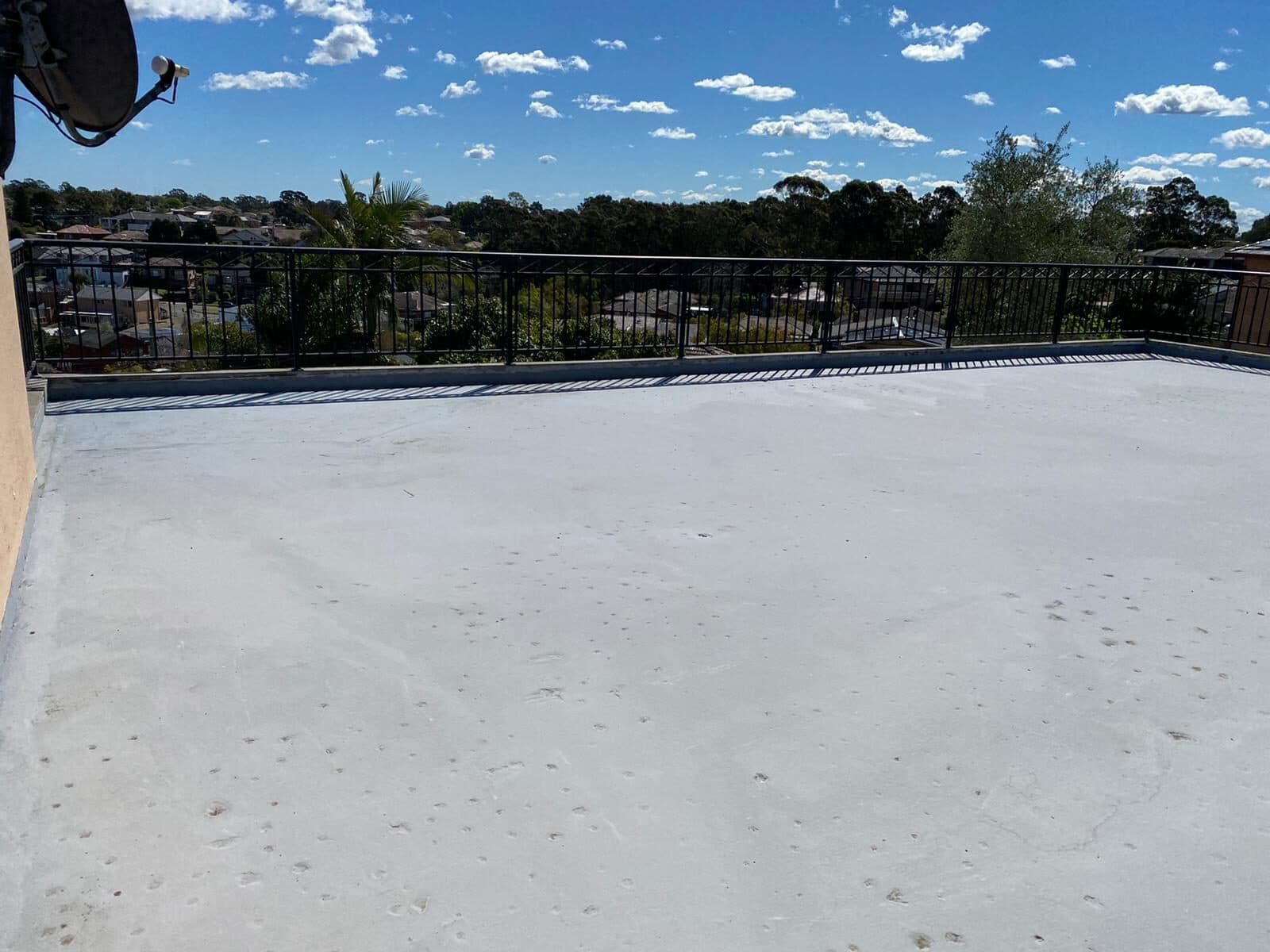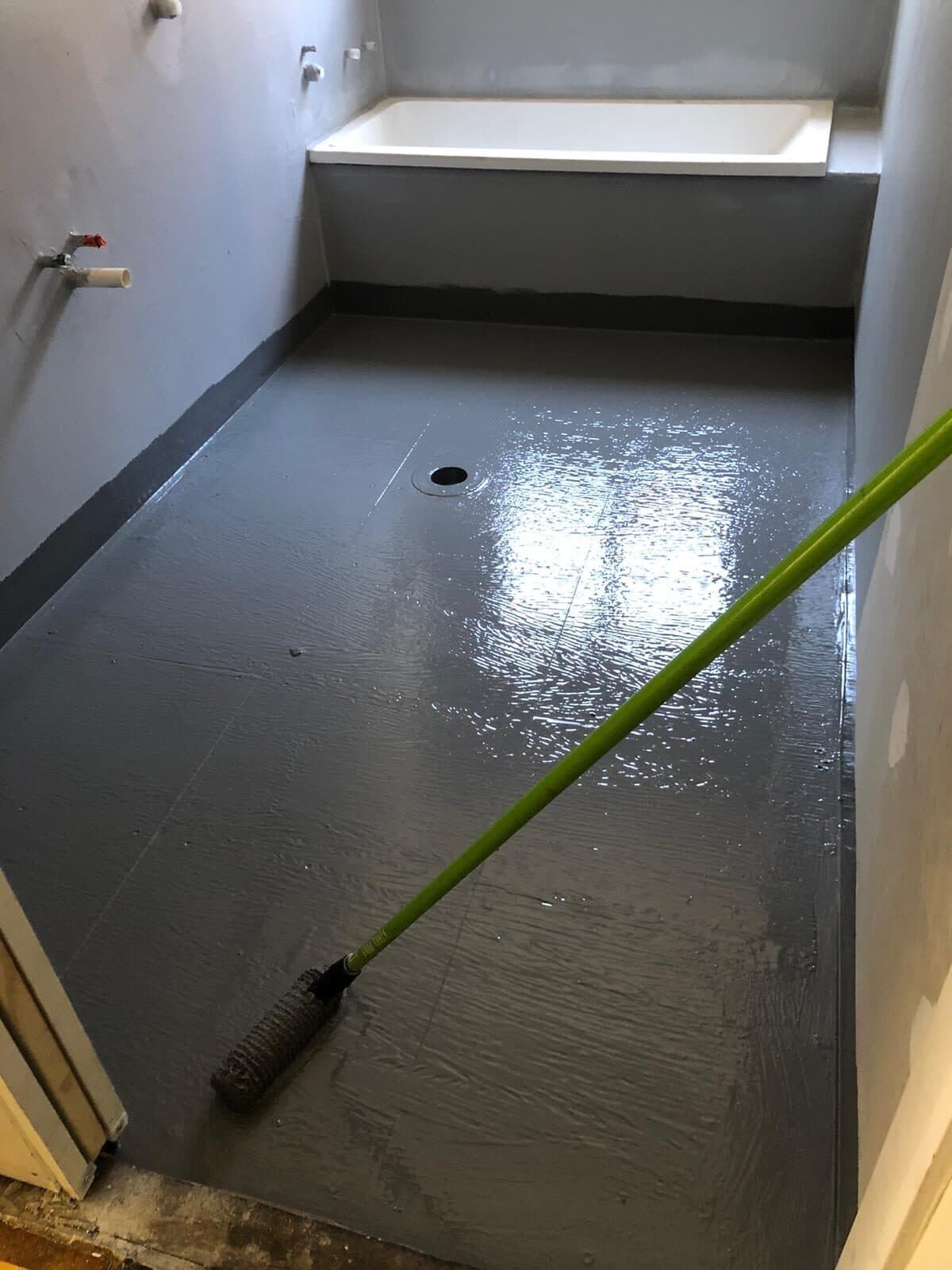
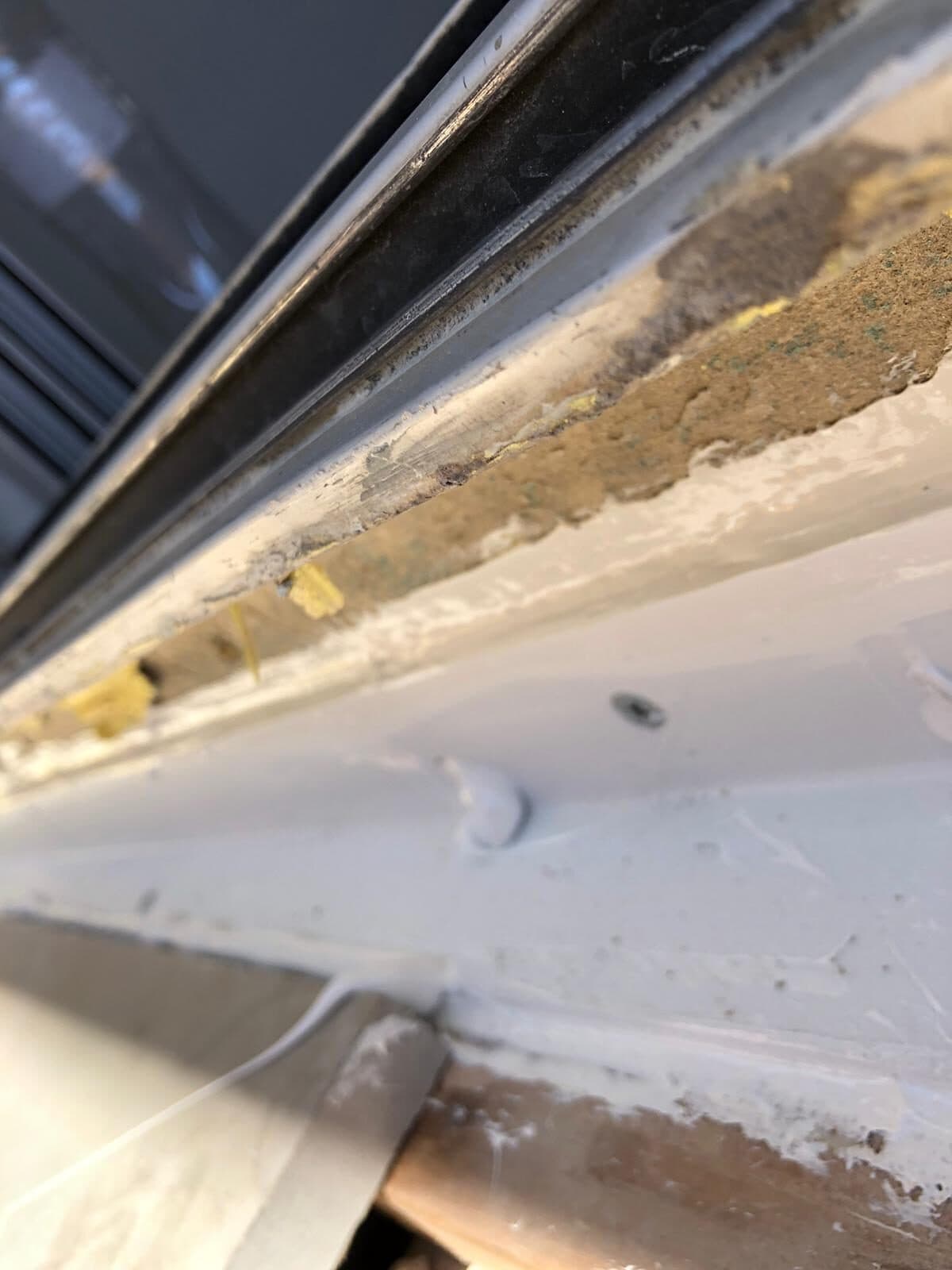

How can you tell a balcony is leaking?
The signs usually show below or beside the balcony:
- Stains, drips or bubbling paint on the ceiling of the room, garage or balcony below, often worst after a run of wet days.
- White crusty salts under or along the edge of the slab, left behind as water dries out of the concrete.
- Rust stains around railing (balustrade) posts, or concrete cracking and lifting at their base.
- Damp carpet or swollen skirting just inside the sliding door.
- Water that stays after rain, as puddles or tiles that stay dark for hours.
- Drummy tiles that sound hollow when tapped, and grout cracking in a straight line.
Take dated photos after heavy rain showing where the water appears and how far it spreads. Whoever investigates will want to know if it follows rain, washing down, or both.
What causes a balcony to leak?
Wrong falls. If the floor slopes away from the outlet, or the outlet sits higher than the floor around it, water ponds. Standing water keeps the tile bed wet and finds any weak spot.
The membrane stops short at the door sill. This is the most common way balcony water gets inside. The membrane has to turn up under the door frame and be sealed to it. If it stops at the slab edge, or the balcony is nearly level with the room, rain blows under the sill onto the carpet.
No upturn at the walls. Without it, water in the tile bed runs off the edge of the membrane into the wall or the slab below.
Railing posts. A post fixed through the tiles goes through the membrane, and lets water in unless sealed into it. Steel posts set in concrete also rust and crack the slab.
Drains. The membrane has to finish into the outlet. If it stops short, or the outlet only drains the tile surface, water on the membrane goes sideways. Leaves and grit in the outlet cause ponding too.
Planter boxes. A planter holds wet soil against its walls all year, and roots find any gap. Without its own membrane, drainage layer and outlet, it will leak into whatever is below.
Cracked tiles and grout. These let more water in, but they are not the waterproofing. Sealing them can slow a leak, not repair a failed membrane.
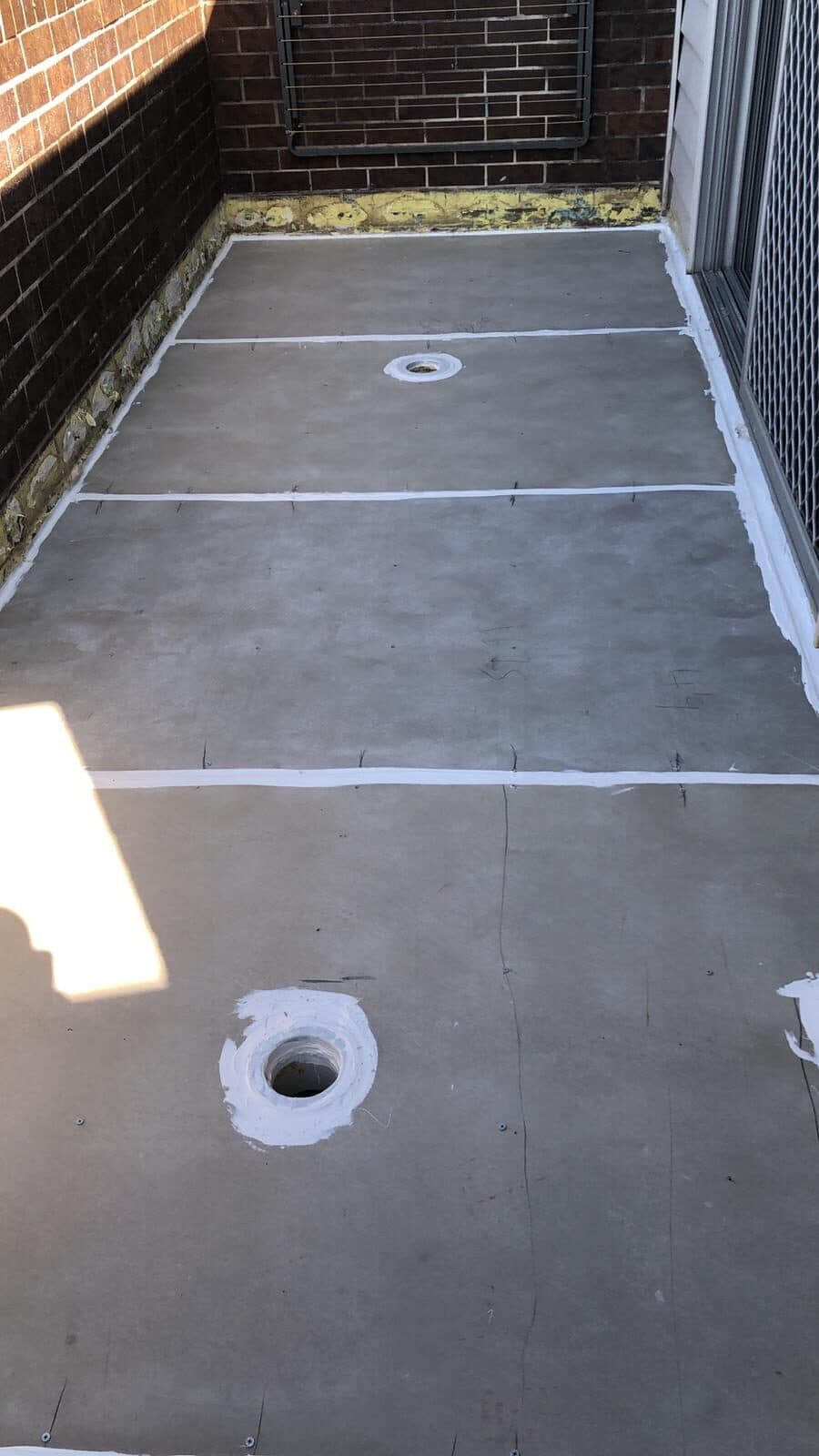
Can a leaking balcony be fixed without removing the tiles?
Sometimes. A leak at one sill, post or outlet can often be repaired on its own. The rest of the membrane must be sound and the balcony must drain. Where the tiles are firmly stuck and the falls are right, a membrane made to go over tiles can stop a grout leak without demolition.
It is the wrong answer when the tiles are drummy or lifting, water ponds, or earlier patches have leaked again. A coating over a wet, failed bed traps the water in and can't correct wrong falls. Clear sealers and silicone along the grout are not repairs. They tend to stop the drips for a season while the membrane stays broken.
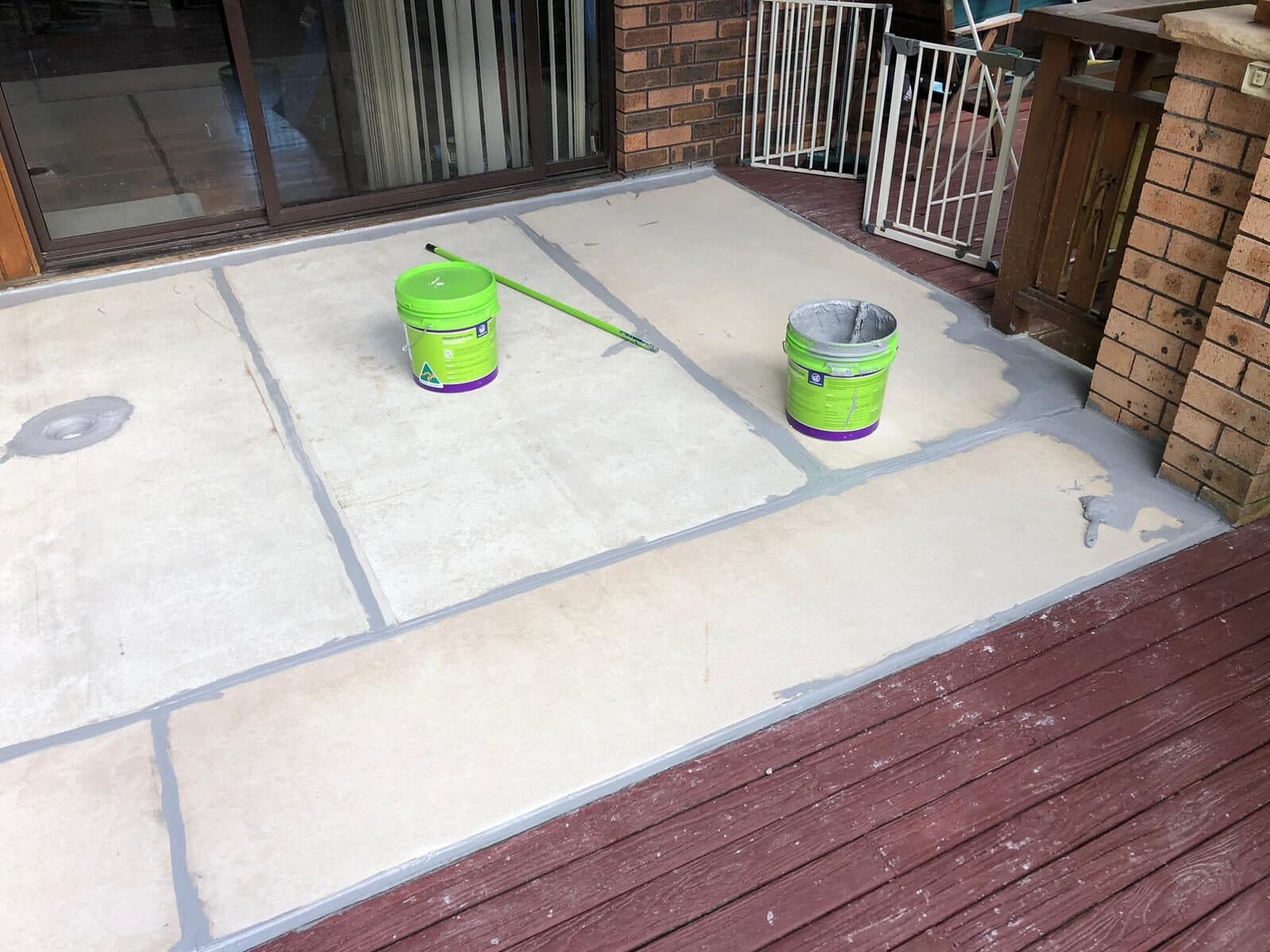
When does a balcony need a new membrane?
When the membrane has failed across the balcony, the falls need correcting, or the tiles are coming up anyway. The balcony is stripped to the slab. The falls are fixed in the slab or a new levelling layer (screed). The new membrane goes on with its upturns, sill and outlets done properly, before the bed and tiles go back.
It is installed to the Australian Standard for outdoor membranes. On our balcony waterproofing jobs, we flood test the membrane before it is covered. You get a waterproofing certificate at the end. See our standards guide and how much waterproofing costs in Sydney.
Code and standards detail for builders and certifiers
National Construction Code
For a house, the deemed-to-satisfy rule in NCC 2022 Volume Two, H2D8, covers balconies, terraces and flat roofs above internal spaces. It requires the membrane to comply with AS 4654.1, and the system to be designed and installed in accordance with AS 4654.2.
H2D8 does not apply to a concrete slab balcony that steps down at least 50 mm below the internal floor. Nor does it apply to spaced decking on framing suitable for outdoor use.
The ABCB's own explanatory note says balconies located over internal spaces are susceptible to letting water in and causing damage.
AS 4654.2
AS 4654.2-2012, Waterproofing membranes for external above-ground use, Part 2: Design and installation, is the current edition. Standards Australia lists it as pending revision. A balcony whose membrane has failed across it, or with the wrong falls, is stripped back and a new membrane installed to AS 4654.2.
Who is responsible for a leaking balcony in a strata building?
In NSW, the owners corporation must repair common property, and each owner what is within their lot. The NSW Government says balconies and balcony doors are usually the owners corporation's, and so is water damage from common property. Your strata plan and by-laws confirm what is common property.
If your building uses the NSW common property memorandum, tiles and waterproofing an owner laid later are that owner's. So a past retile can change the answer, as it does for bathrooms in a strata unit. See our remedial and strata waterproofing page.
If your balcony, or the one above you, is leaking:
- Report it in writing to the strata manager or committee, with your photos and dates.
- Don't arrange the repair yourself unless it is an emergency. If you pay for an emergency repair that is the owners corporation's job, keep photos and the tradesperson's written details to seek a refund.
- If nothing happens, NSW Fair Trading offers free mediation and can take a complaint further. You can take legal action for loss from a failure to maintain common property. You have 6 years from becoming aware of the loss.
In a newer building, the statutory warranties (up to 6 years) or a building bond may cover the repair. Apartment repairs may also need a registered design practitioner's design first.
More strata detail: the common property memorandum and newer buildings
The common property memorandum
Some schemes have adopted the NSW Government's common property memorandum through their by-laws. A scheme can choose to adopt it if its by-laws do not already define common property. Under the memorandum, the owners corporation is responsible for a balcony's original tiles and the waterproofing laid with them when the strata plan was registered. It is also responsible for the balcony's columns, railings and ceilings. Floor tiles and waterproofing laid by an owner after registration are that owner's responsibility.
Newer buildings
Defects in work up to 6 years old may be covered by the statutory warranties. Residential buildings of four storeys or more completed in the last 2 years may have a developer-paid building bond held through Fair Trading. Unless it is an emergency or falls under a narrow exclusion, remedial waterproofing on an apartment building also needs a registered design practitioner's design and compliance declarations, under the Design and Building Practitioners scheme.
What can you do while you wait for the repair?
- Keep the outlet clear of leaves and grit.
- Keep pot plants and saucers off the floor so water can drain.
- Don't drill new fixings through the tiles.
- Don't seal the grout or run silicone along the sill as a fix. It can hide the source.
- Record each leak with the date and the weather.
That record tells a waterproofer whether the problem is the sill, the outlet, a post or the whole membrane. See also how long waterproofing lasts.
What this means for you
A leak at one spot is often a local repair. Ponding, drummy tiles or repeat leaks usually mean a new membrane. In a strata building, report it in writing first.
For a free written quote, send photos of the balcony and of any stain on the ceiling or wall below. Use our enquiry form or call 0451 662 300.
Sources (6)
- 1.NSW Government: strata repairs and maintenance (checked 28 October 2026)
- 2.NSW Government: common property memorandum (checked 28 October 2026)
- 3.NSW Government: common property memorandum (PDF) (checked 28 October 2026)
- 4.NSW Government: remedial building work in regulated buildings (checked 28 October 2026)
- 5.NCC 2022 Volume Two, Part H2: damp and weatherproofing (H2D8) (checked 28 October 2026)
- 6.Standards Australia: AS 4654.2-2012 (checked 28 October 2026)