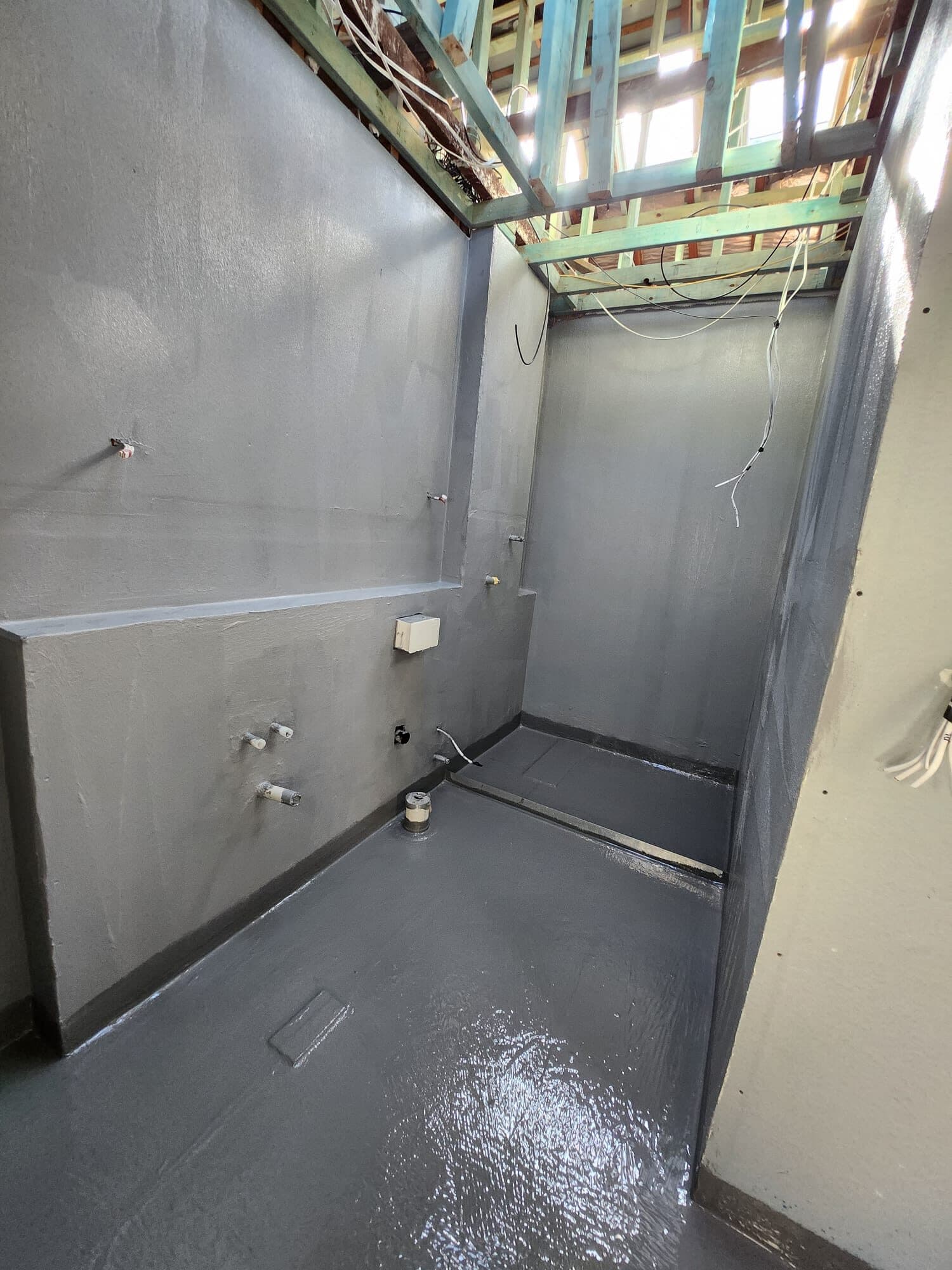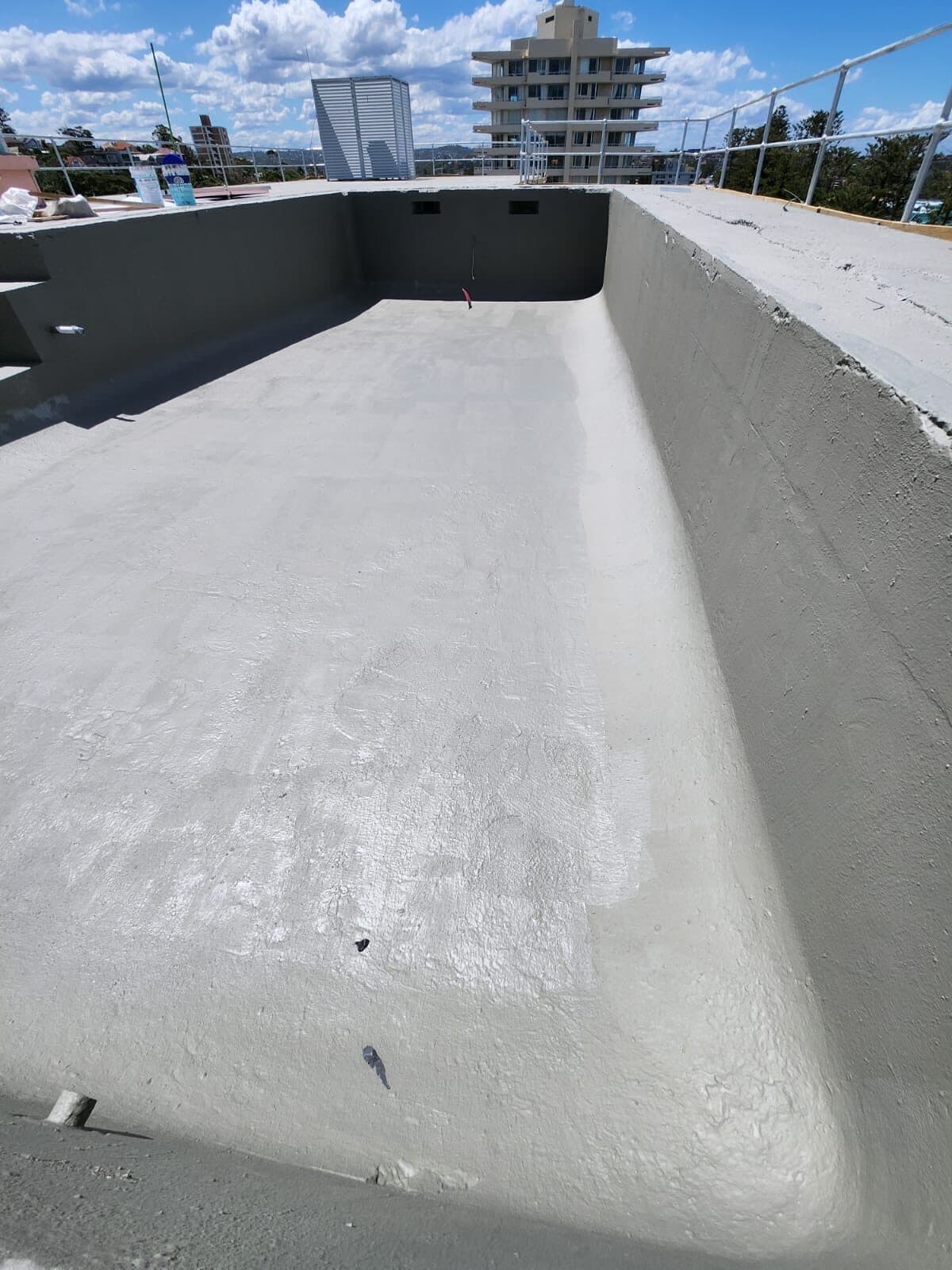
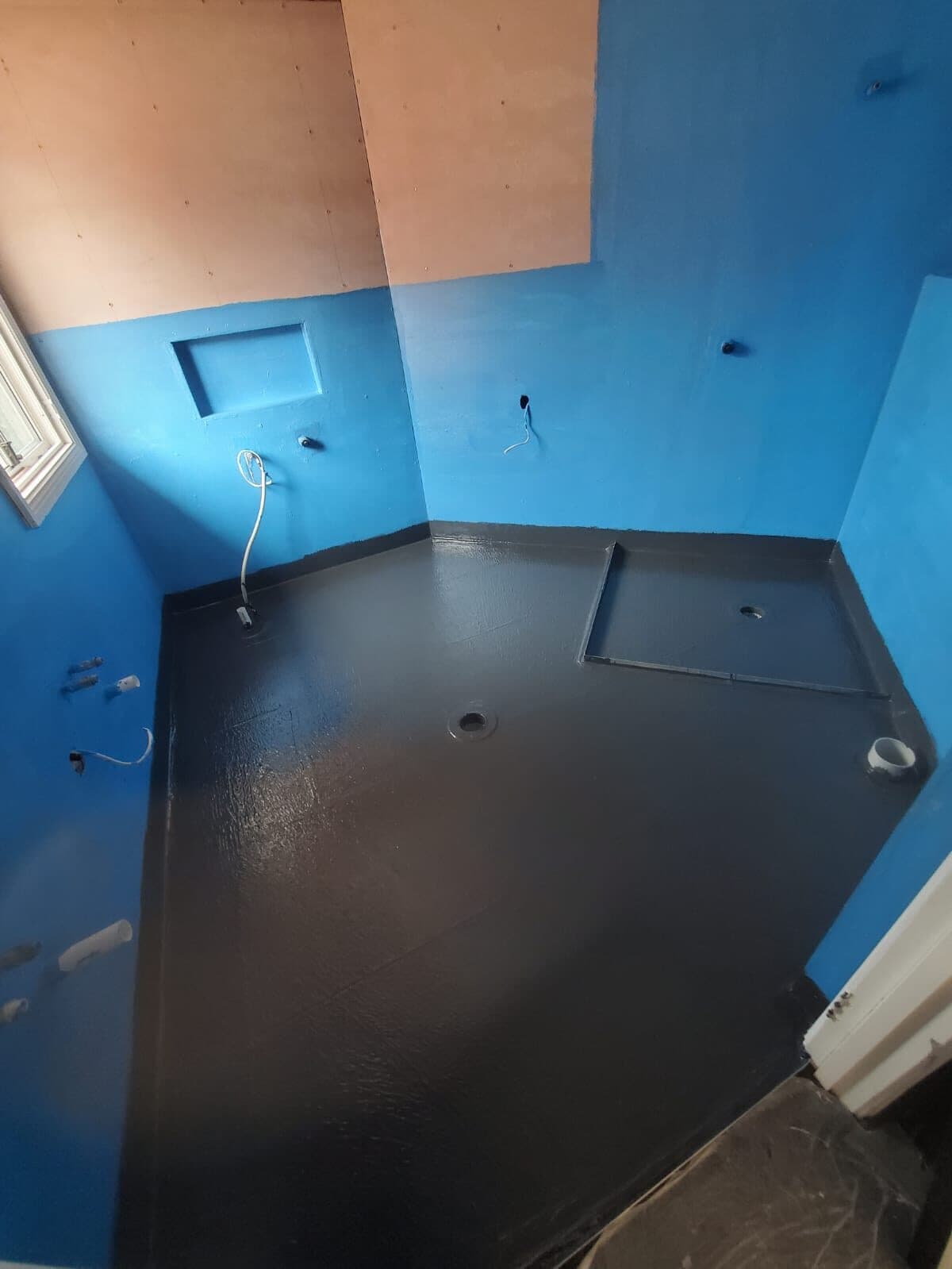
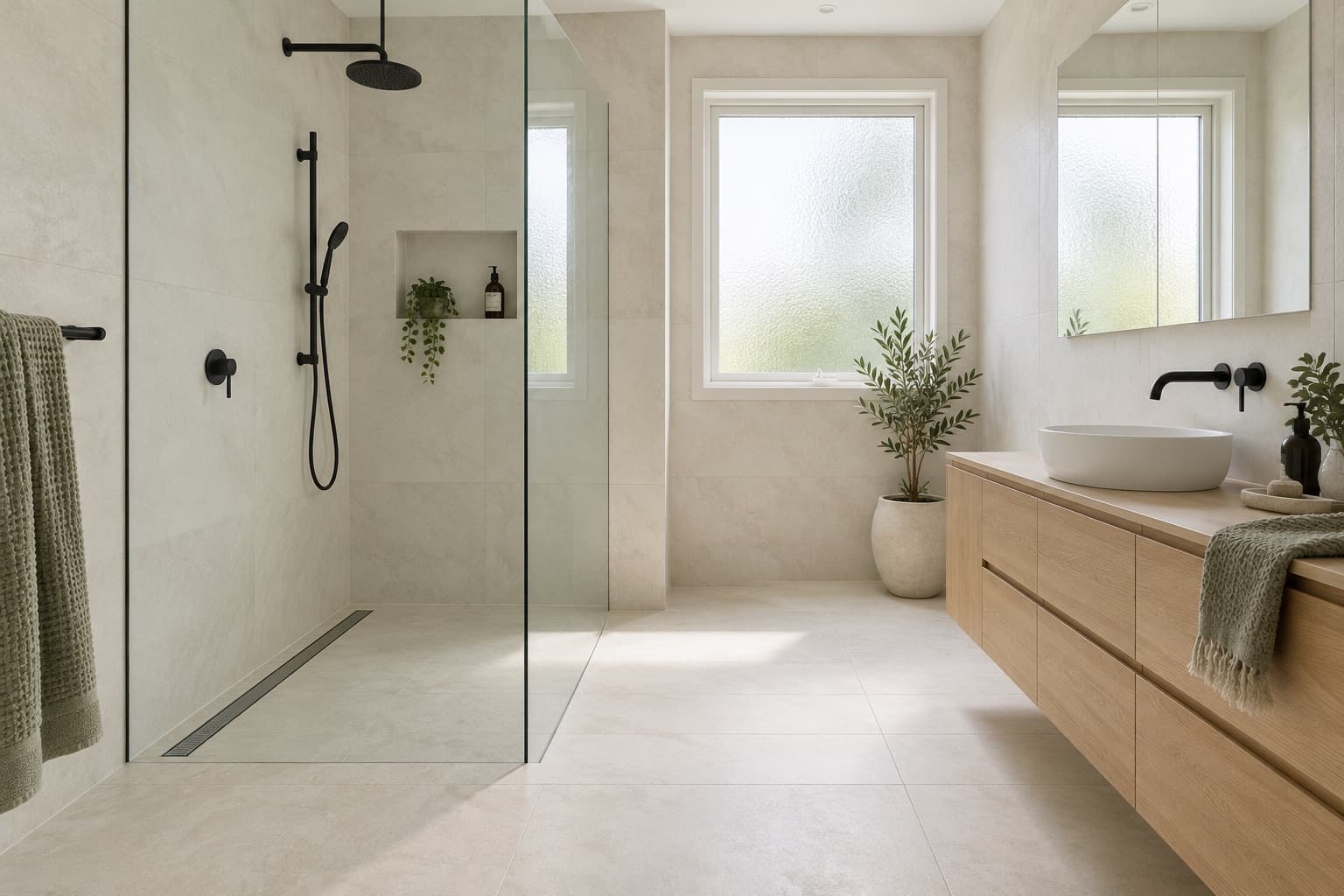
Lifting tiles tears the waterproof layer (the membrane) they are stuck to. A new membrane cannot be reliably joined to an old one of unknown type and age.
If only the walls outside the shower are being retiled, or new tiles are going over sound old ones, the membrane may not need touching. But that also means any leak already there stays.
We do the waterproofing, not the tiling. See typical Sydney prices for what each figure covers. Our bathroom and shower waterproofing page covers the work.
Which surfaces need new waterproofing?
The shower floor or walls. Yes. The shower floor, including any hob or step-down, has to be waterproof. So do the shower walls, to at least 1800 mm above the floor. Once those tiles are off, the old membrane is damaged and a new one goes on.
The rest of the floor. Usually yes. The join between the walls and the floor around the room has to be waterproof, and the old detailing comes up with the floor tiles. On a timber-based floor, the whole floor must be waterproof, not just water resistant. So the new membrane covers the entire room.
Walls outside the shower. Often no. Outside the shower, the code only asks for water resistance in set places:
- 150 mm up the wall above a bath, basin, sink or tub that sits within 75 mm of a wall
- around washing machine taps
- near a toilet with a handheld bidet spray.
Retiling the rest of the walls is a tiling job, as long as those spots keep their protection.
Tiling over the old tiles. The old membrane stays where it is, and so does any fault in it. Tiling over also raises the floor. That can affect door clearances, the step into the shower and the slope of the floor to the drain (the falls). It suits a dry bathroom that only needs a new look, not one that is leaking.
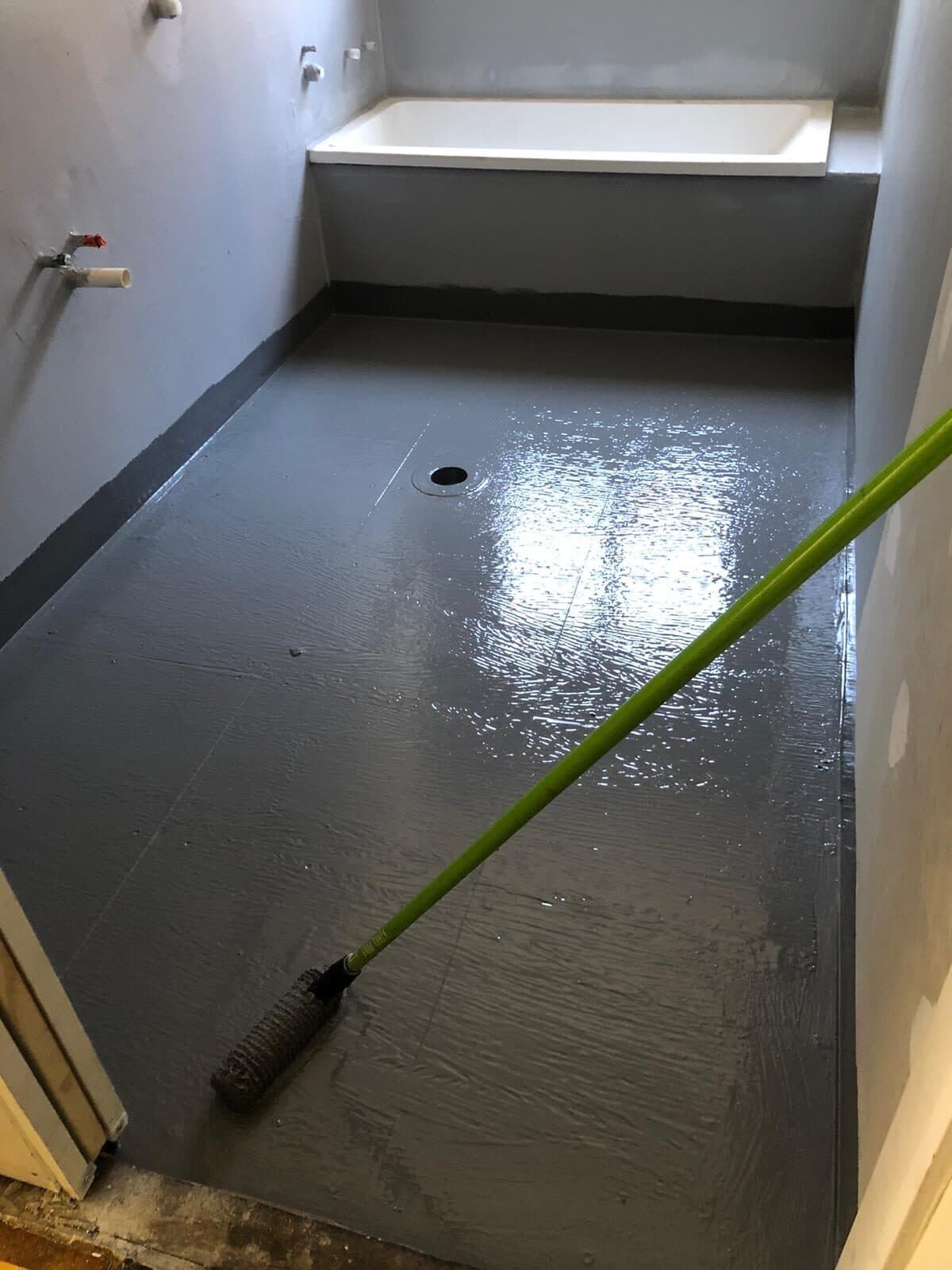
How can you tell whether the membrane has failed?
If the bathroom is leaking, the membrane needs redoing whatever tiles you choose. Signs that it has failed:
- a stain, bubbling paint or a damp patch on the ceiling below the bathroom
- swollen skirting boards, door frames or vanity kickboards
- mould or flaking paint on the wall on the other side of the shower
- tiles that sound hollow when tapped, or grout that stays dark long after a shower.
Regrouting and resealing fix failed grout and silicone. They are worth trying when the only signs are inside the shower. When water is showing outside the shower or below it, the membrane has usually failed. Our guide to how long waterproofing lasts covers the signs in more detail.
What changes the cost of the waterproofing?
The surfaces being redone. A shower recess alone is a smaller job than the shower and the whole floor. A timber-based floor needs a full membrane across the room.
What is under the old tiles. Older showers often have a thick mortar bed that has to be broken out. Wall sheeting that has been wet for years may need replacing. If the falls to the drain are wrong, the floor has to be regraded before the membrane goes on. The code sets how steep the slope to the drain must be.
The shower design. A hobless or level-entry shower needs a waterstop and carefully set falls. A shower with a hob needs the hob built and secured to the floor before the membrane goes over it.
The drain. On a concrete floor, the membrane has to finish in a drainage flange at the floor waste. If the old waste fitting has no flange or is damaged, a licensed plumber replaces it before we start.
Cure time. Each coat cures before the next goes on, and the membrane cures again before tiling. That shapes how long the bathroom is out of use more than the size of the room does.
Tile choice, cut work, the number of fittings and the tiler's labour sit in the tiling quote, not the waterproofing one. Our waterproofing cost guide explains what a waterproofing quote should list.
In what order does the work happen?
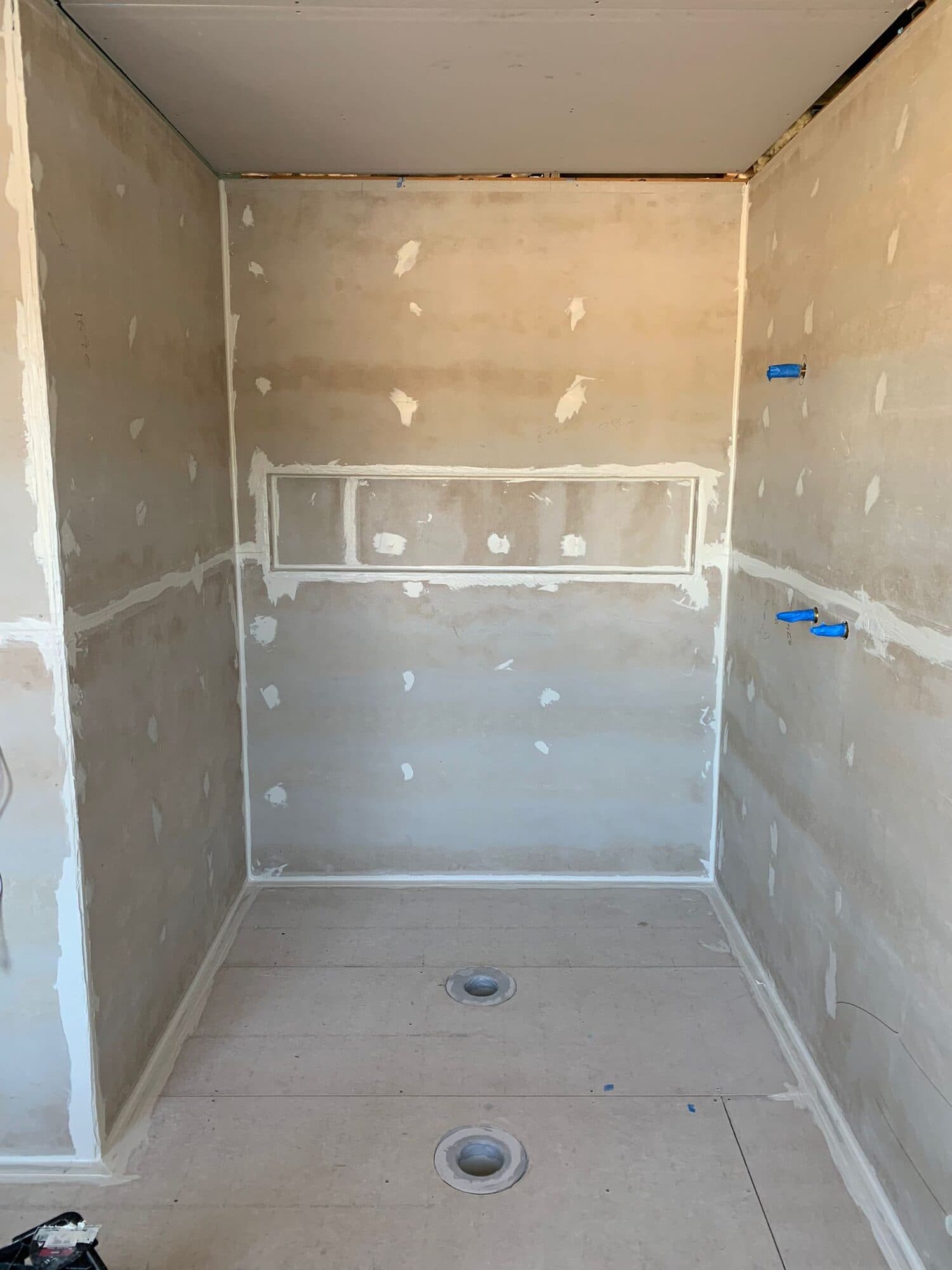
On a retile with new waterproofing, the usual order is:
- strip the old tiles, bed and failed membrane
- replace any damaged sheeting and fix the falls
- the plumber sets the waste and drainage flange
- prime, and install bond breakers at the junctions
- apply the membrane coats and let them cure
- hand over to the tiler.
The work may be part of a development consent or complying development certificate. If so, the certifier may need to inspect the waterproofing before it is covered, so book that in before the tiler arrives. Our standards guide explains the inspection and the paperwork.
What this means for you
The waterproofing and the tiling are often quoted separately. Make sure the two quotes meet in the middle: who removes the old tiles, who pays for substrate repairs, and how many days the tiler has to wait before starting. To get a waterproofing quote, send photos of the bathroom, any stains below it and the floor type through our enquiry form.
Technical detail for builders and certifiers
Clause references: ABCB Housing Provisions, Part 10.2
- 10.2.2: the shower area floor, including any hob or step-down, is waterproof, and so are the shower walls to at least 1800 mm above the floor substrate.
- 10.2.3: the wall and floor junction around the room is waterproof.
- 10.2.1, 10.2.4 and 10.2.5: water resistance to 150 mm above a bath, basin, sink or tub within 75 mm of a wall, around washing machine taps, and near a toilet with a handheld bidet spray.
- 10.2.12: the floor falls to the waste at between 1:80 and 1:50.
- 10.2.16: a hob is built and secured to the floor before the membrane goes over it.
- 10.2.29: on a concrete floor, the membrane finishes in a drainage flange at the waste.
Sources (1)
- 1.ABCB Housing Provisions, Part 10.2: wet area waterproofing (checked 12 October 2026)