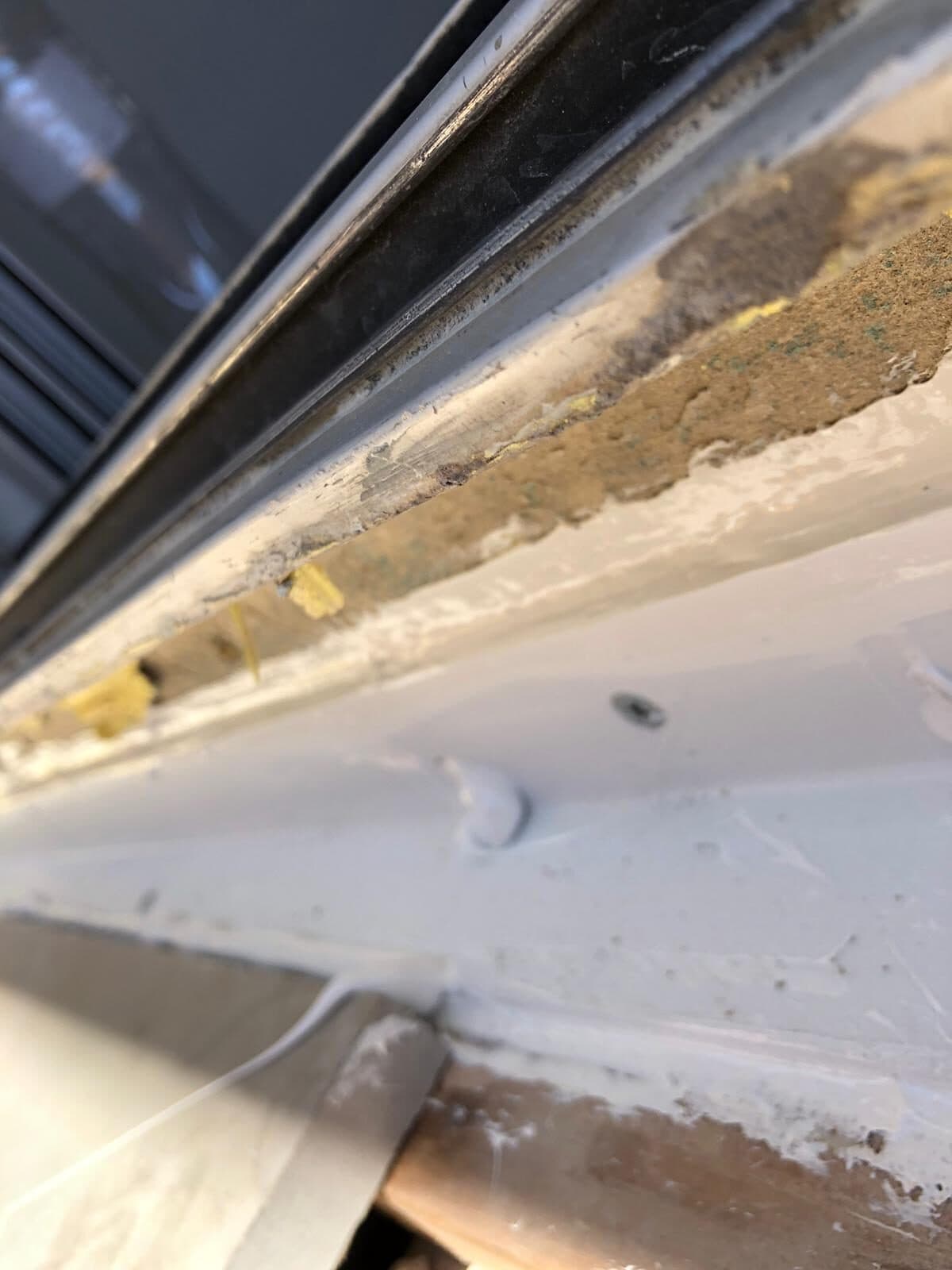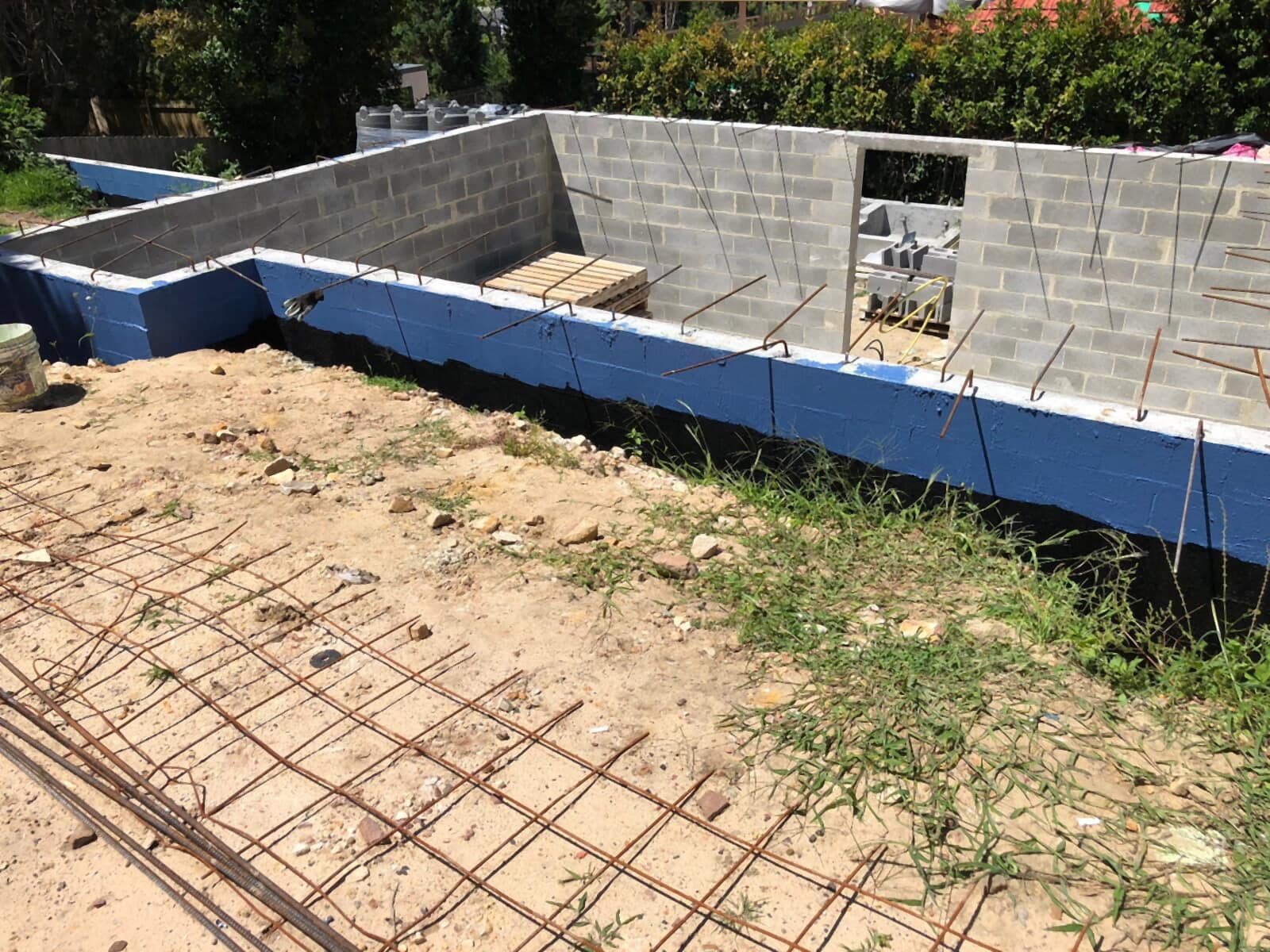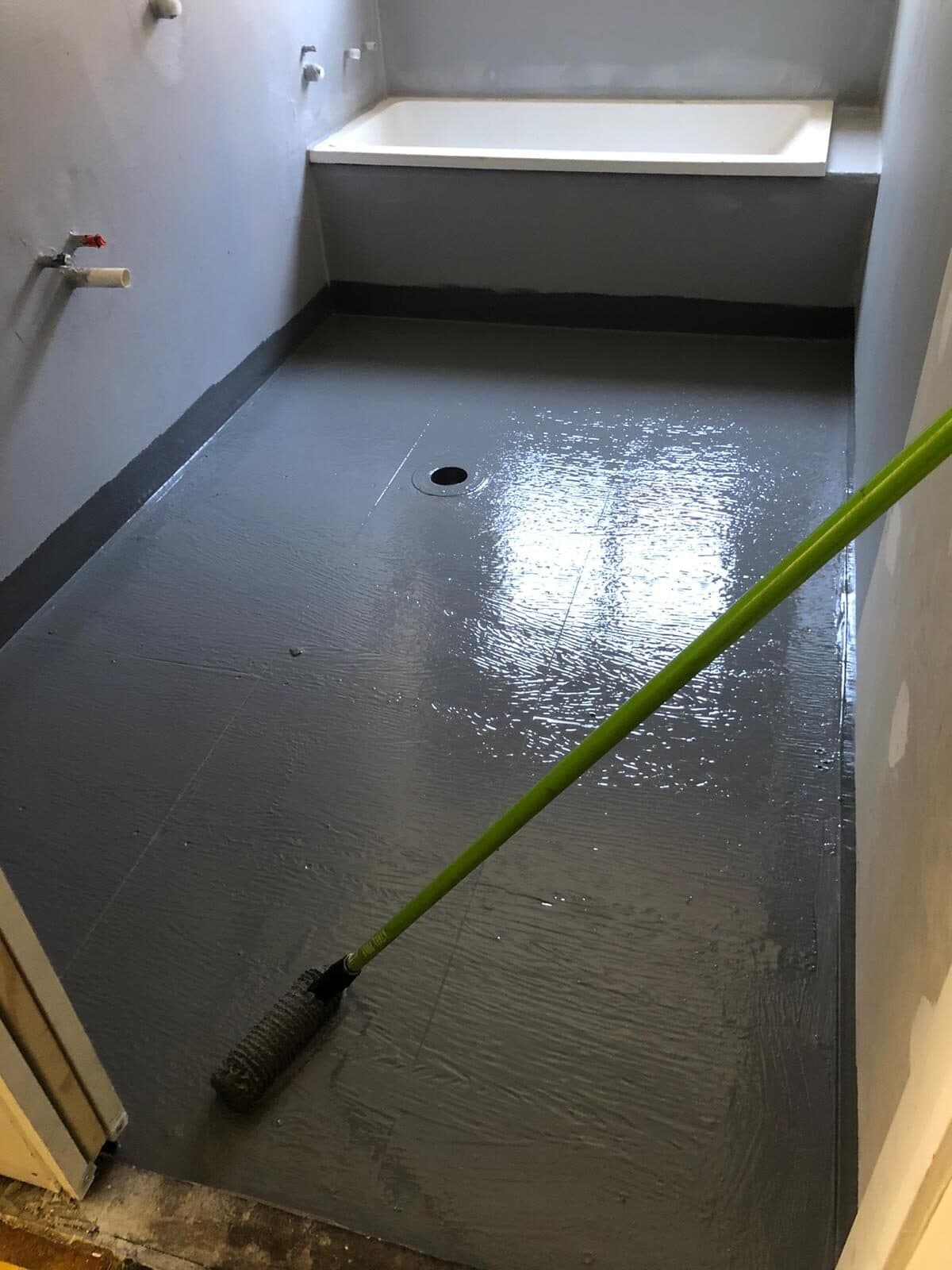
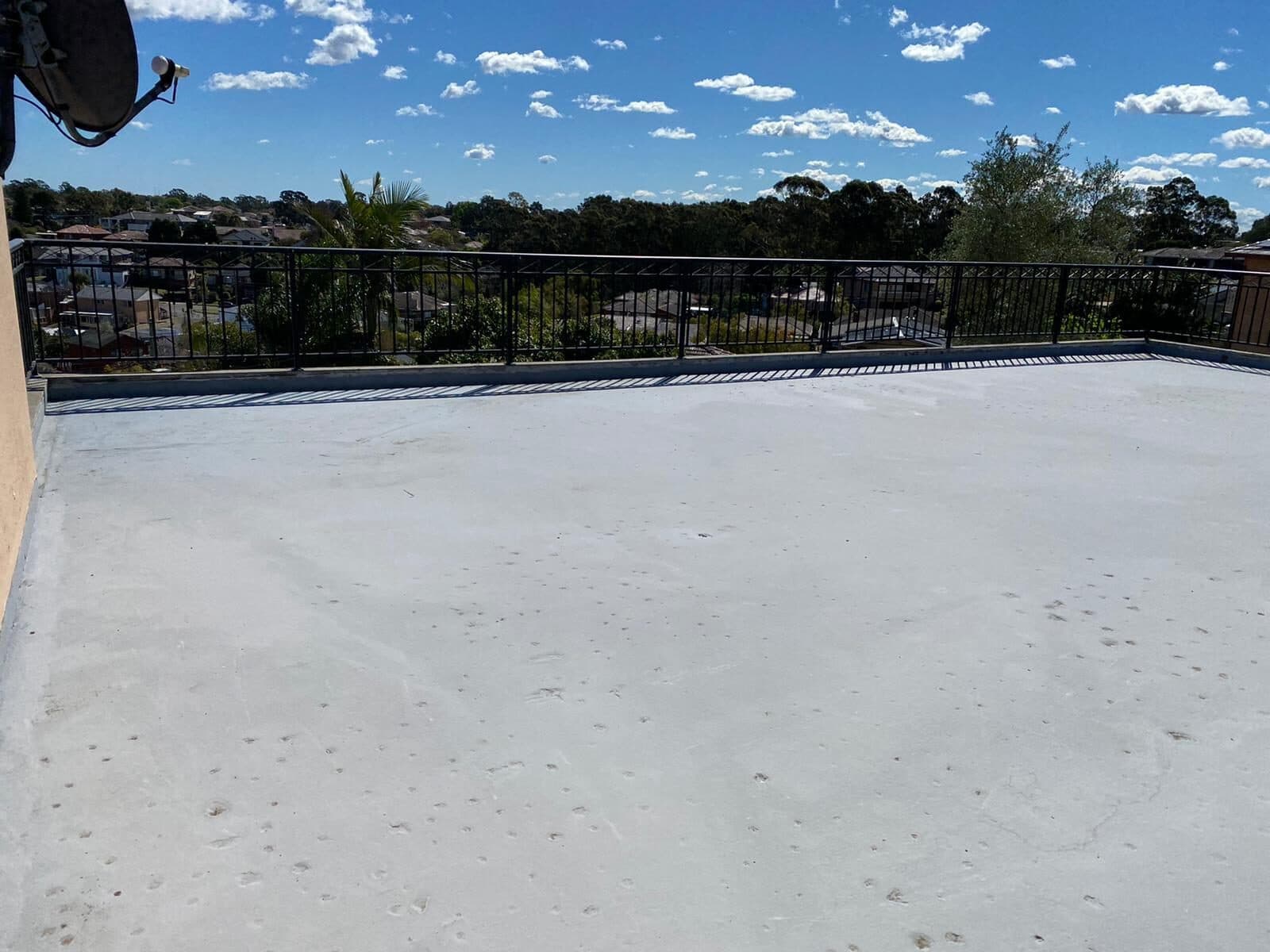
Typical weak spots are a corner without a bond breaker, or a drain the membrane was never sealed into. Another is a door sill the membrane stops short of.
NSW law sets how long the work is covered. For contracts signed since 1 February 2012, home building work carries statutory warranties. They last 6 years for major defects and 2 years for other defects. NSW names waterproofing as an example of a major element.
Manufacturers publish expected service lives for their own products, under stated conditions. For a figure for your job, ask for the technical data sheet of the system on your quote. Check that the conditions it assumes match your balcony, roof or bathroom. Our balcony waterproofing and bathroom and shower waterproofing pages cover the work itself.
What types of waterproofing membrane are there?
| Type | How it goes on | Good for | Weak point |
|---|---|---|---|
| Liquid-applied | Brushed, rolled or sprayed on in coats; dries to a film with no seams | Showers, bathroom floors, balconies with lots of corners and penetrations | Only works at the thickness the maker specifies |
| Sheet | Factory-made rolls or sheets, bonded down or laid loose, overlapping at the edges | An even thickness, because it's made in a factory | The laps, and the joins at corners and penetrations |
| Torch-on | Bitumen sheets heated with a gas torch so they stick down and fuse at the laps | Large flat roofs, terraces, below ground | Needs an open flame, so not suited to every site |
| Cementitious | Cement-based coating, some with polymers added for flexibility | Basements, water tanks, pools, retaining walls | Rigid versions can't stretch far |
| Crystalline | Applied to concrete or added to the mix | Inside basements and lift pits, against water pushing from behind | Can't bridge a crack that keeps moving |
More on each:
- Liquid membranes suit tight spaces because they have no seams. Their thickness depends on the number of coats and how evenly they go on. Most are made to be covered by tiles or a levelling layer (screed). Only some are rated to be left in the sun.
- Sheet membranes live or die by their laps and joins, where they are most likely to leak.
- Torch-on membranes with a mineral surface can face the sun; others need covering. See our torch-on waterproofing page.
- Cementitious membranes bond well to concrete and masonry. They suit stable concrete better than surfaces that move.
- Crystalline waterproofing reacts with moisture in the concrete to form crystals. These block the pores and fine cracks, so it works within the concrete rather than as a layer on top.
Membrane classes under the building code
The NCC groups wet-area membranes by how far they stretch: Class I (low extensibility), Class II (medium) and Class III (high). This is set out in the ABCB Housing Provisions, 10.2.27.
The bond breakers at the corners have to suit the class of membrane used. A low-stretch membrane needs to flex across a joint rather than stretch over it.
What shortens a membrane's life?
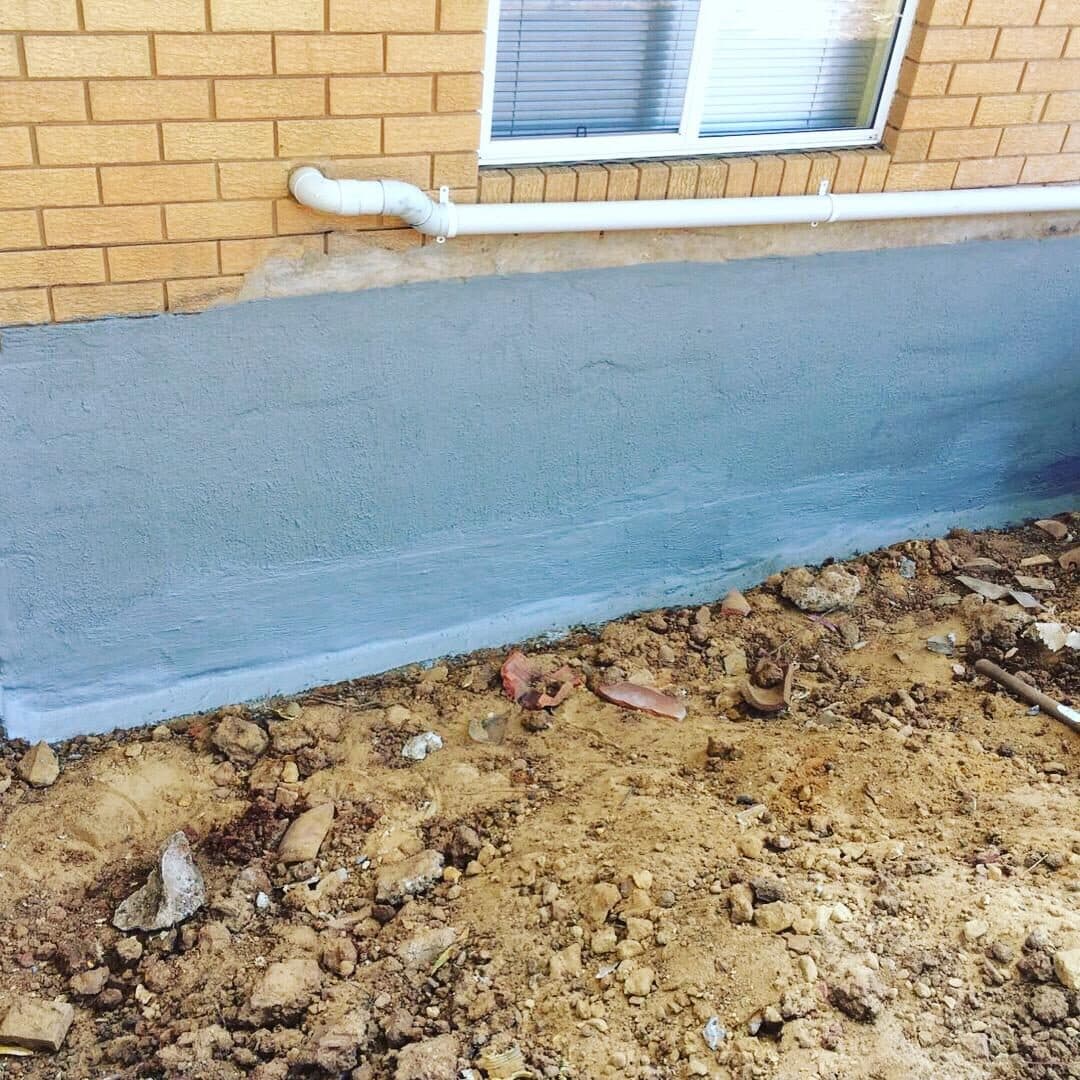
- Movement. Buildings move with temperature, moisture and load. The movement gathers at joins: wall to floor, shower hob to wall, slab to upstand. A membrane carried across those joins without a suitable bond breaker will eventually split there. So will a rigid membrane on a surface that flexes, such as a timber floor.
- Sun and heat. A membrane rated only for use under tiles breaks down when left exposed. On roofs and balconies, it has to be rated for exposure or covered.
- Ponding water. Where the falls are wrong, water sits instead of draining. The membrane is then under water for days at a time. On a balcony, this often shows as a patch of tiles that stays dark after rain.
- Holes made after the job. Screws for a shower screen, a new balustrade post or a tap moved through a tiled wall all go through the membrane. Unless each is sealed into it, it lets water in.
- Water pushing from the wrong side. Below ground, groundwater pushes against the structure. A membrane on the inside face must be designed to resist that pressure. An ordinary coating will be pushed off.
- Short cuts when it goes on. Too few coats, no primer, or tiling before the membrane has cured all leave a membrane that looks complete but fails early. They are the hardest faults to find, because they are under the tiles.
What are the signs that waterproofing has failed?
In a bathroom, look beyond the shower:
- a stain or bubbling paint on the ceiling below
- swollen skirting boards, door frames or vanity kickboards
- mould or flaking paint on the other side of the shower wall
- tiles that sound hollow when tapped
- grout that stays dark long after a shower, or a musty smell that doesn't clear. Both point to water sitting under the tiles.
On a balcony, the signs are usually below or beside it. Look for water marks or drips on the ceiling of the room or balcony underneath, and white salts on the slab edge. Other signs are rust stains around balustrade posts, lifting tiles, and rain coming in under the door sill.
On a flat roof, look for water ponding after rain, blisters or splits in an exposed membrane, and laps that have lifted.
Below ground, damp patches, tide marks and white crystal-like salts on the inside of walls show water coming through.
Failed grout and a failed membrane can look similar. Regrouting and resealing fix the grout and silicone, not the membrane. If water shows outside the shower or on the ceiling below, the membrane is usually the problem.
Can you waterproof over an existing membrane?
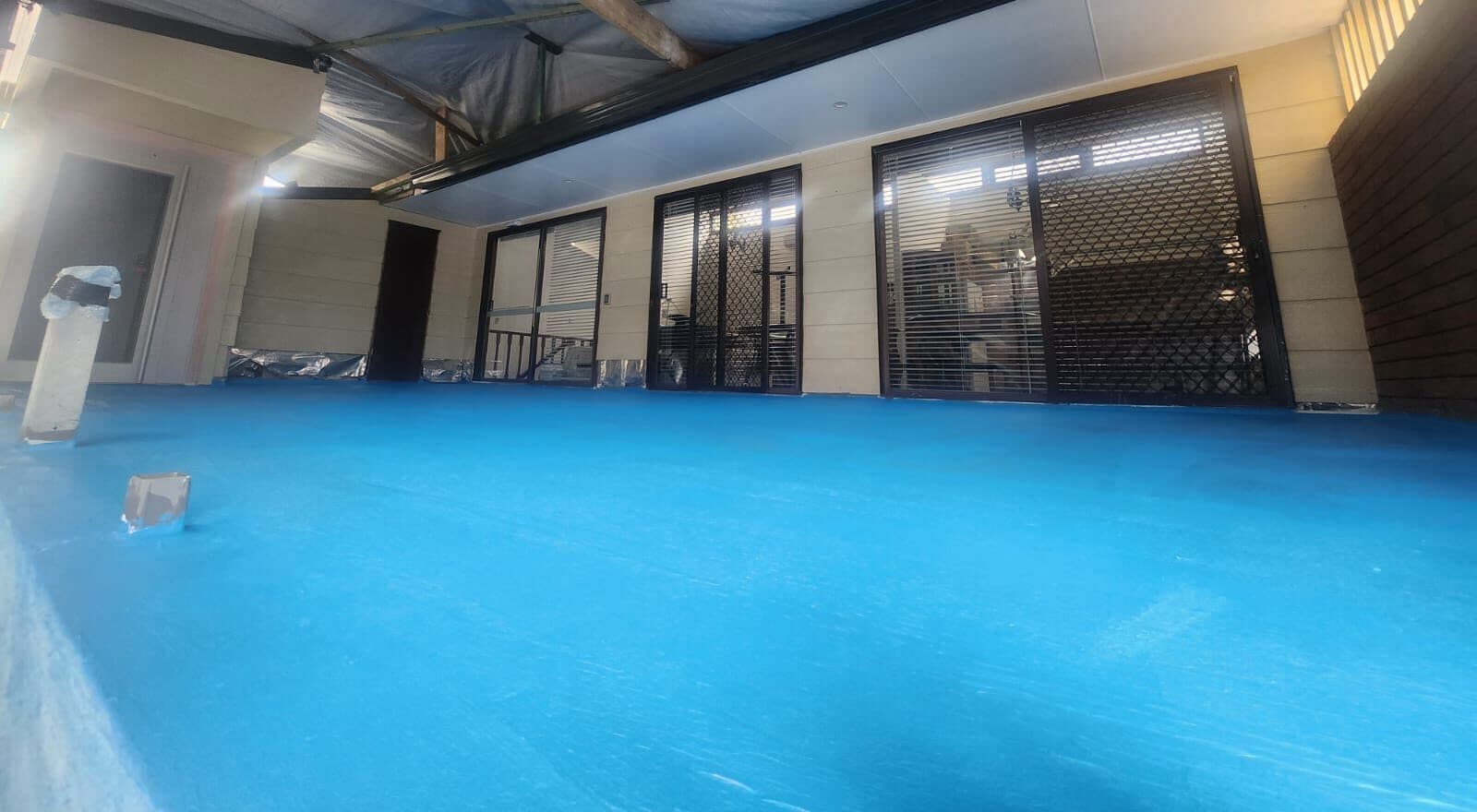
Sometimes, but rarely when the old one has already failed. A new membrane has to bond to what is under it and be compatible with it. An old membrane of unknown type and age is an uncertain base.
More importantly, a leak usually comes from a detail, such as the drain connection, a join or a sill. A new coat over the top does not repair it. On a leaking balcony or shower, the usual answer is to take up the tiles and failed membrane and start again from a sound substrate.
How do you get the most life from a new membrane?
Most of it is decided on the day it goes on. Ask whoever quotes:
- which standard the work is installed to: AS 3740 or the Housing Provisions for a wet area, AS 4654.2 for a balcony, terrace or roof
- which class of membrane they are using, and what it is rated for
- how long it needs to cure before tiling.
Our standards guide explains what those standards require. How much waterproofing costs explains what a quote should include.
After the job:
- keep floor wastes and balcony outlets clear
- reseal the silicone at shower joins when it splits
- have any new fixing through a tiled wet area or balcony sealed by someone who knows where the membrane is.
What this means for you
Don't count on a set number of years. Look after the weak spots, and act early on the signs above. If you think your waterproofing has failed, send photos for a free quote through our enquiry form or call 0451 662 300.
Sources (2)
- 1.NSW Government: resolving building disputes (checked 12 October 2026)
- 2.ABCB Housing Provisions, Part 10.2: wet area waterproofing (checked 12 October 2026)