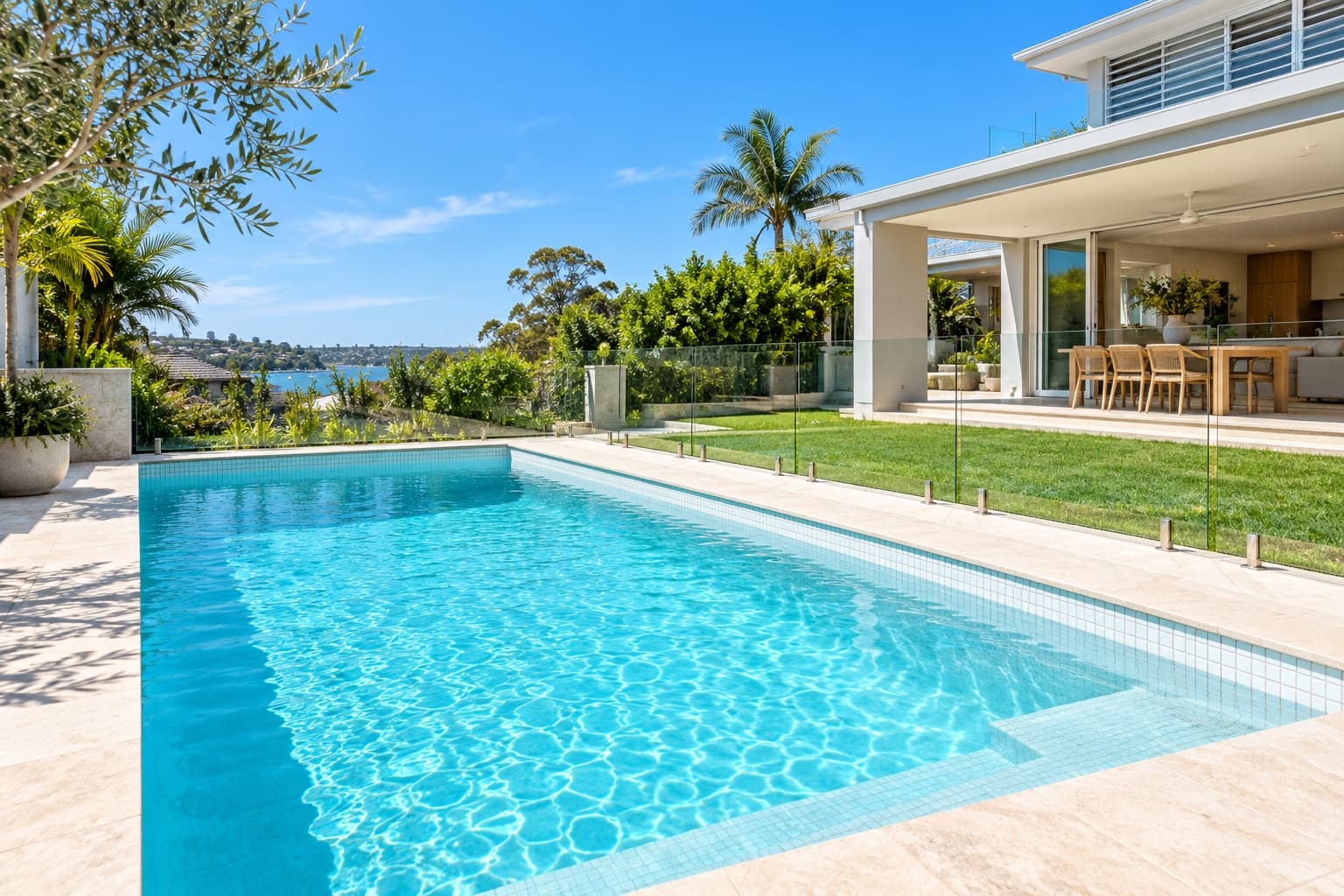
Where a pool lands in those ranges comes down to four things:
- how much of it is being tiled
- which tile goes back on
- what is found under the old tiles once they come off
- what it takes to drain, reach and refill the pool.
The part many quotes leave open is the shell, the concrete body of the pool. If the pool is losing water or the render behind the tiles has let go, the shell needs repairing and waterproofing before a tiler starts. Otherwise the new tiles go onto the same problem.
- Pool fully retiled
- $15,000–$35,000
- The whole job on a typical residential pool in ceramic or porcelain: old tiles off, the surface prepared, a membrane, then new tiles supplied and laid by a licensed tiler. Not included: shell or concrete repairs, major re-rendering, coping and the water to refill.
- Pool waterline tiles replaced
- $2,000–$5,000
- Old waterline tiles and adhesive removed, the surface prepared, and new tiles set and grouted by a licensed tiler. Not included: draining and refilling, coping and render repairs.
Use these as a planning guide for the whole retile. We don't lay pool tiles ourselves: we coordinate the tiling through a licensed tiler, who quotes it separately. We repair and waterproof the shell so the tiler has a sound, watertight base. We quote that part from photos or a visit: see our pool, pond and water tank waterproofing page.
What changes the cost of retiling a pool?
How much is being tiled. Replacing a band of waterline tiles is a much smaller job than retiling the whole interior. A waterline retile can sometimes be done by dropping the water level rather than emptying the pool.
The tile. Glass and ceramic mosaic sheets, porcelain and stone all cost different amounts to buy and to lay. Small mosaics take longer around curves, and every step, bench, skimmer box, light and return fitting adds cut work.
Taking the old tiles off. Old tiles and adhesive have to be removed back to a sound surface. In older pools the render or bedding often comes away with them, and has to be rebuilt before anything else.
Repairs to the shell. Once the tiles are off, cracks, crumbling concrete, rusting reinforcement and hollow render become visible. Repairs found at this stage are the most common reason a pool retile costs more than the first quote. So a fair quote says how they will be handled.
Draining, access and refilling. Emptying the pool adds time and cost. So does getting materials and rubbish in and out through a side gate or a building, and refilling and rebalancing the water. The pool is out of use from the day it is drained until the adhesive, grout and any membrane have cured.
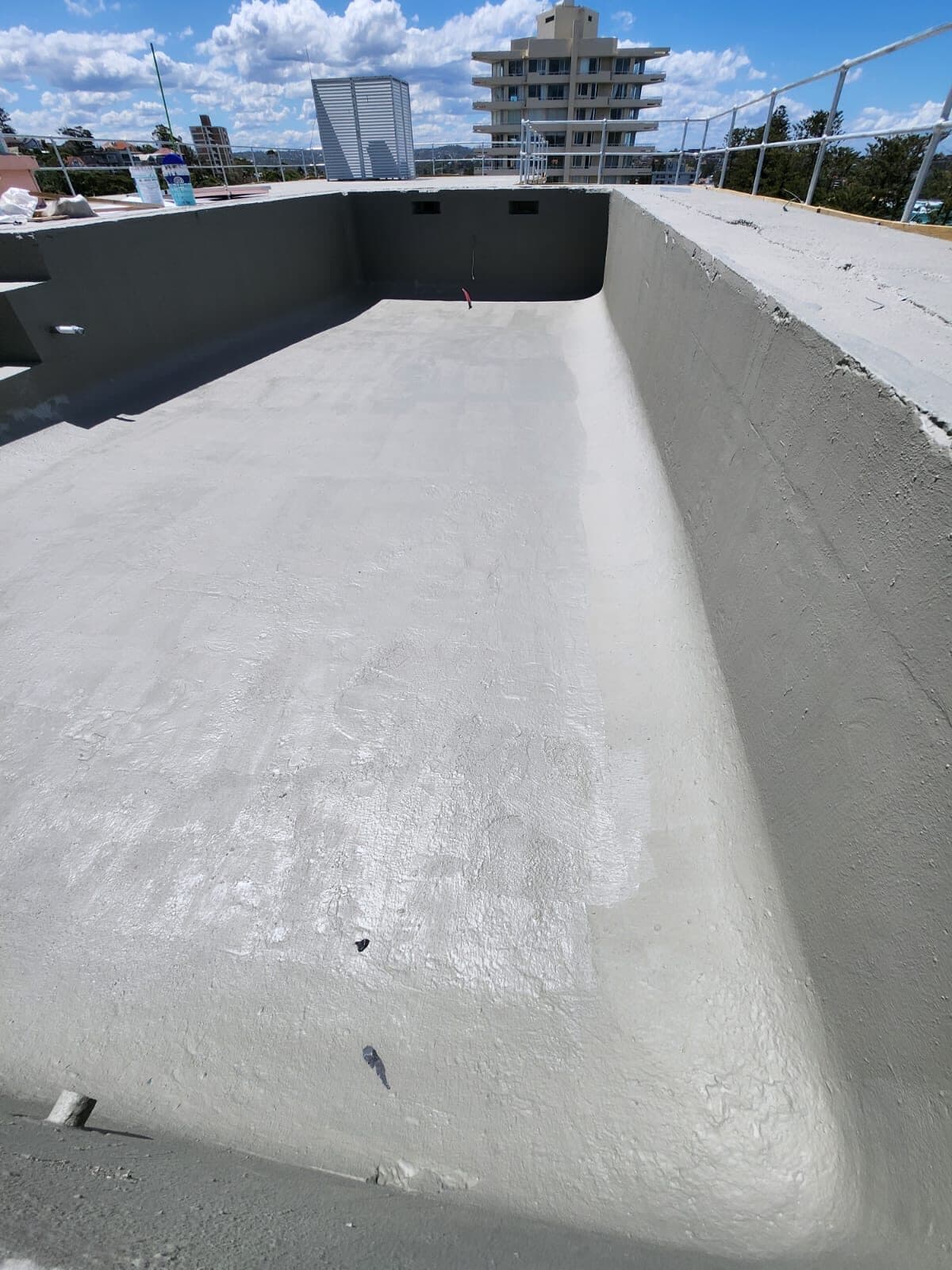
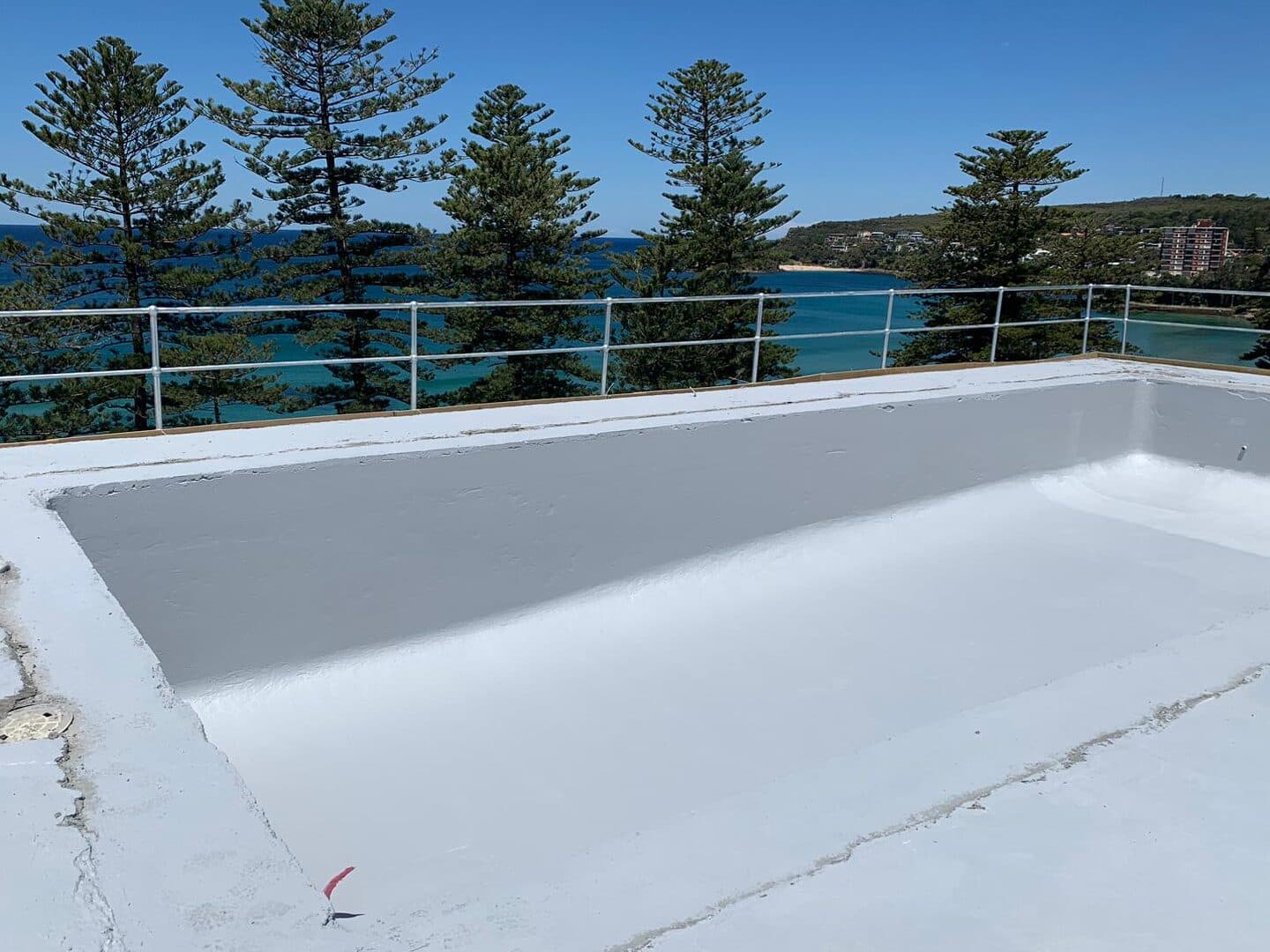
Rooftop and podium pools. A pool on a roof or over a car park sits above rooms or parking, so a leak does damage below. On these pools the waterproofing is the main job, and access, staging and approvals on a strata building shape the price.
Does the pool need waterproofing before it is retiled?
A concrete pool shell holds water through the concrete and render, and the tiles are a finish over the top. If the shell is sound and the pool holds its level, retiling may need nothing more than surface repairs. If it is losing water, the waterproofing has to be dealt with first.
Signs that point to the shell rather than the tiles:
- the water level drops faster than evaporation explains. To check, stand a bucket of pool water on the top step. Mark the water level inside the bucket and in the pool, and compare after a day. If the pool has dropped noticeably more than the bucket, it is leaking
- cracks in the shell or the coping, especially ones that have widened
- tiles that sound hollow when tapped, or that have fallen off in patches
- white salts on the tile joints or on the outside of the shell
- damp in a wall or room beside or below the pool.
When the tiles are off, the shell can be inspected properly. Cracks and joints are repaired. Then a membrane or cement-based (cementitious) waterproofing system suited to permanent immersion is applied before the tiler lays the new tiles. Doing it in that order means the shell is only opened up once.
Draining an in-ground pool needs care. Where groundwater is high, an empty shell can be pushed upwards. So the timing of the drain and the pool's hydrostatic relief valve should be part of the plan. That valve sits in the floor and lets groundwater in, so an empty shell isn't pushed up.
In what order does the work happen?
On a full retile with waterproofing, the usual order is:
- drain the pool, or lower it for a waterline job
- remove the old tiles and any loose render or bedding
- repair cracks, joints and damaged concrete
- apply the waterproofing and let it cure for the time the system requires
- tile, grout and let the adhesive and grout cure
- refill and balance the water.
Each cure time comes from the product's instructions. Filling too early is one of the quickest ways to undo a new pool finish.
What should the quotes include?
You will usually have two quotes, one for the waterproofing and one for the tiling. Check that between them they cover:
- who drains and refills the pool
- who removes the old tiles
- how shell repairs are priced if they turn out to be larger than expected
- which waterproofing system is used and how long it cures
- when the tiler can start.
Check every contractor's licence on the NSW Government licence register. Our guide to what waterproofing costs explains what a waterproofing quote should list.
What this means for you
If your pool is losing water or you are planning a retile, have the shell repaired and waterproofed before the new tiles go on. Send us photos of the pool, the waterline and any cracks through the enquiry form. Tell us whether it is in-ground, rooftop or podium.