
NSW contractor licence 260823C
Roof waterproofing in Sydney
We waterproof flat concrete roofs and roof terraces on houses and apartment buildings, with membranes chosen for the sun, the foot traffic and whatever sits on top.
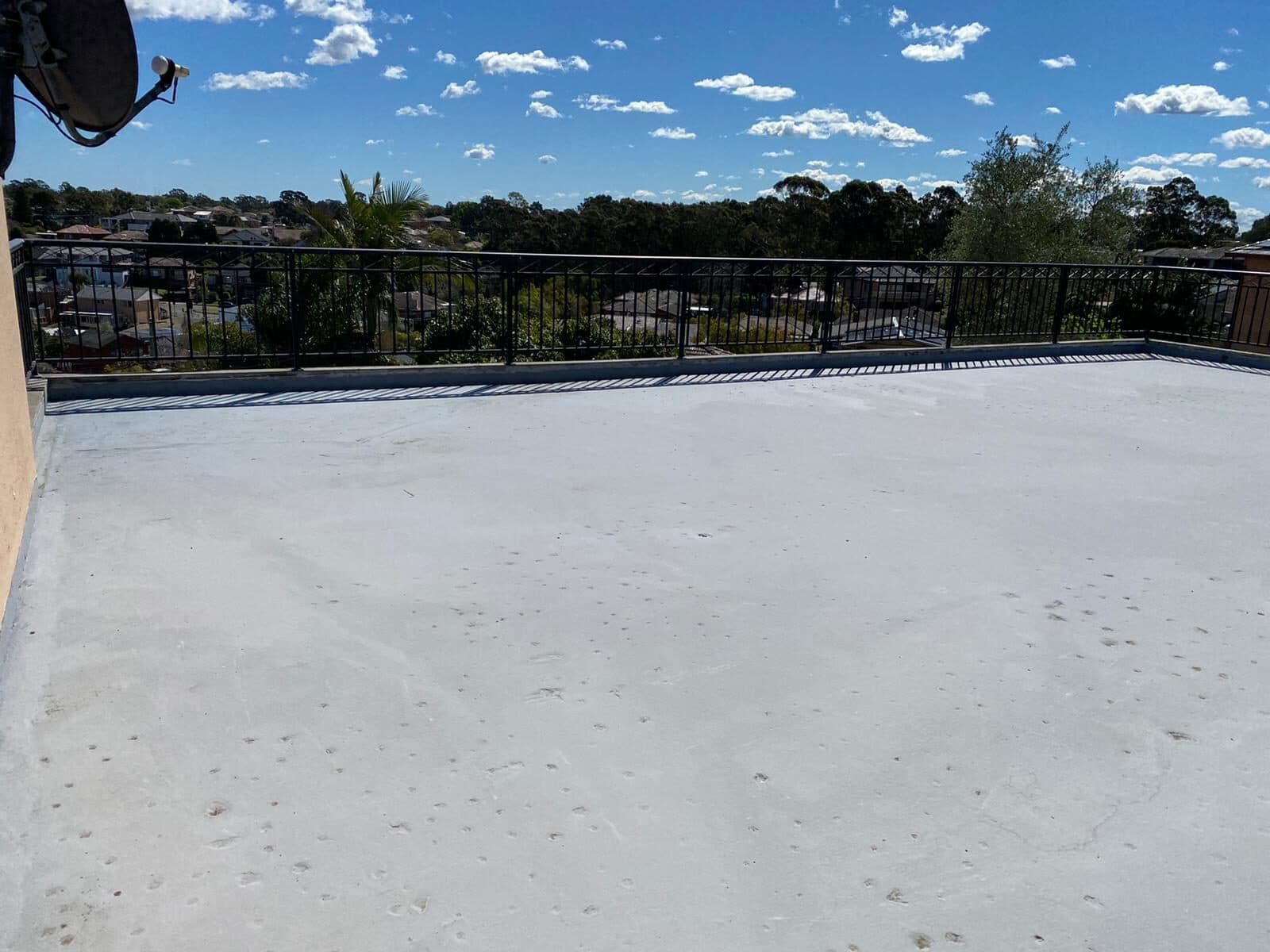
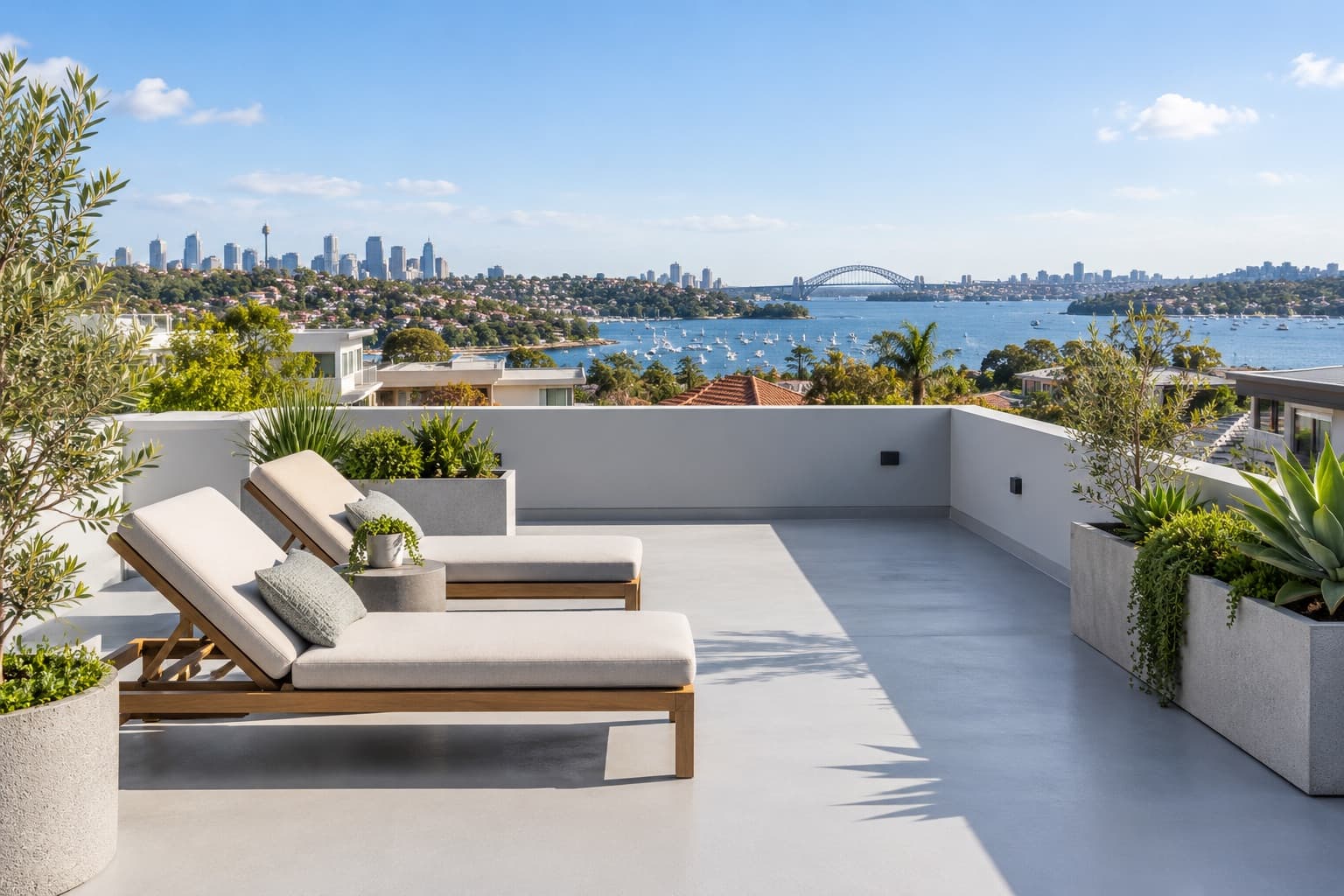 Finished look
- Done to AS 4654.2
- Falls, outlets and overflows checked
- Flood tested, with a certificate
Get a free quote
Roof waterproofing
Add photos if you can. We usually reply within one business day.
NSW contractor licence 260823C
Our service
What roof waterproofing includes
Checking the old system
What’s there, whether it’s still bonded, and whether it can be overlaid or has to come off.
Falls, outlets and overflows
Low spots corrected, outlets set at membrane level and an overflow provided before the membrane goes down.
Upstands and terminations
The membrane is taken up parapets, plant plinths and penetrations, and its top edge is finished so water can’t get behind it.
The right finish on top
A UV-resistant top coat for an exposed roof, or a protection layer under pavers and tiles on a terrace.
Signs
Why flat roofs leak
Ponding
Water that sits for days means the falls are inadequate or the outlets are blocked. It breaks membranes down and finds every weak spot.
Parapets and upstands
Where the membrane turns up a parapet, a missing or lifted top edge lets water run in behind it.
Outlets and overflows
An outlet that isn’t sealed to the membrane, or a blocked one with no overflow, sends water somewhere it shouldn’t go.
A worn-out surface
Crazing, blistering or a chalky membrane is at the end of its life and is replaced rather than painted over.
The build-up
A roof terrace build-up
A roof terrace with pavers on pedestals over a concrete roof slab.
Can be lifted to reach the membrane later.
Water runs on the membrane under the pavers to the outlets.
Spreads the load of the pedestals so they don’t damage the membrane.
Made to AS 4654.1, and UV-resistant wherever it will be exposed.
Strengthens the membrane where it changes direction.
Prepares the slab for the membrane.
Falls to the outlets so the membrane drains.
Diagram of a typical job, not to scale. Select a layer to see what it does.
Step by step
How the job runs
- 1
Photos and a quote
Photos of the roof, the outlets and any stain inside, for a free written quote. We usually reply within one business day.
- 2
Old system checked
Whether the existing membrane is still bonded and can be overlaid, or has to come off.
- 3
Falls and outlets fixed
Low spots are corrected, outlets set at membrane level and an overflow provided before the membrane goes down.
- 4
Membrane, upstands and finish
Taken up parapets and penetrations with its top edge finished, then a UV-resistant top coat or a protection layer under pavers.
Prices
How we price roof waterproofing
Roofs are priced on the area, access, the outlets and upstands, and what is already there, so we price them from photos or a visit. Quotes are free.
What moves the price: our cost guideWhy choose us
Licensed, insured and backed in writing
A licensed waterproofer who does the job once and does it properly, with the insurance, paperwork and warranty to back it.
Check licence 260823C on the NSW registerLicence 260823C
NSW Waterproofing Technician since 2013, current to 10 July 2028.
$20m insured
Public liability cover on every job, big or small.
Statutory warranties
On home building work in NSW: six years for major defects, two for others.
Tested before it’s covered
Showers, bathrooms, balconies and flat roofs flood tested, with a waterproofing certificate.
Before you book
Details and questions
Still not sure?
Send a few photos of the job and the answer comes back with your free written quote.
Send photos for a quoteCall 0451 662 300More about this work
Flat roofs only: concrete roof slabs, roof terraces and the flat sections over garages and extensions. Pitched tile and metal roofs are a job for a roofer or roof plumber.
A flat roof takes the full Sydney sun, so the membrane has to cope with UV and heat movement as well as standing water. The NCC requires membranes on flat roofs and roof terraces over internal spaces to meet AS 4654.1, with the system designed and installed to AS 4654.2.
The main options are a liquid membrane with a UV-resistant top coat, a torch-on bitumen sheet, or a membrane protected under pavers or tiles on a terrace. A roof nobody walks on can carry an exposed membrane; a roof terrace needs a finish over it that takes feet and furniture.
Roof terraces
A roof terrace adds weight, foot traffic, planters and furniture to a roof that was first waterproofed only for rain. Planters and heavy pots go on pedestals or over a protection layer, and nothing is fixed through the membrane.
Balustrades, shade structures and plant are fixed to upstands or bases that are detailed into the membrane, so the terrace can be fitted out without making new holes in it.
Why do roof waterproofing quotes differ?
Whether the old system comes off. A coating over the old membrane costs less, but it doesn’t fix poor falls or a failed layer underneath. Compare what gets removed, how ponding water is fixed, and whether upstands and outlets are included.
Do you flood test a roof and give a certificate?
Yes. We flood test the membrane before it is covered or put into service, where the roof allows it, and give you a waterproofing certificate.
Does the old roof membrane have to come off?
Not always. If it’s well bonded and compatible, some systems can go over it after cleaning and priming. If it’s blistered, lifting or wet underneath, it comes off, because a new layer over trapped water will blister too.
Is torch-on or a liquid membrane better for a flat roof?
Neither in every case. Torch-on is tough and suits large open roofs with few penetrations; liquid membranes suit roofs crowded with pipes, plinths and awkward shapes, and can be used where an open flame isn’t safe.
Related
Keep reading
Related work
Areas we cover
Our work on the NSW licence register
Standards and rules referred to on this page (4)
- 1.Standards Australia: AS 4654.1-2012 Waterproofing membranes for external above-ground use, Part 1: Materials (checked 12 October 2026)
- 2.Standards Australia: AS 4654.2-2012 Waterproofing membranes for external above-ground use, Part 2: Design and installation (checked 12 October 2026)
- 3.ABCB: NCC 2022 Volume Two, Part H2 (H2D8 External waterproofing) (checked 12 October 2026)
- 4.ABCB: NCC 2022 Volume One, Part F1 (F1D4 Exposed joints, F1D5 External waterproofing membranes) (checked 12 October 2026)