
NSW contractor licence 260823C
Pool, pond and water tank waterproofing in Sydney
We waterproof concrete pools, rooftop pools, ponds and water tanks: structures built to hold water in, rather than keep rain out.
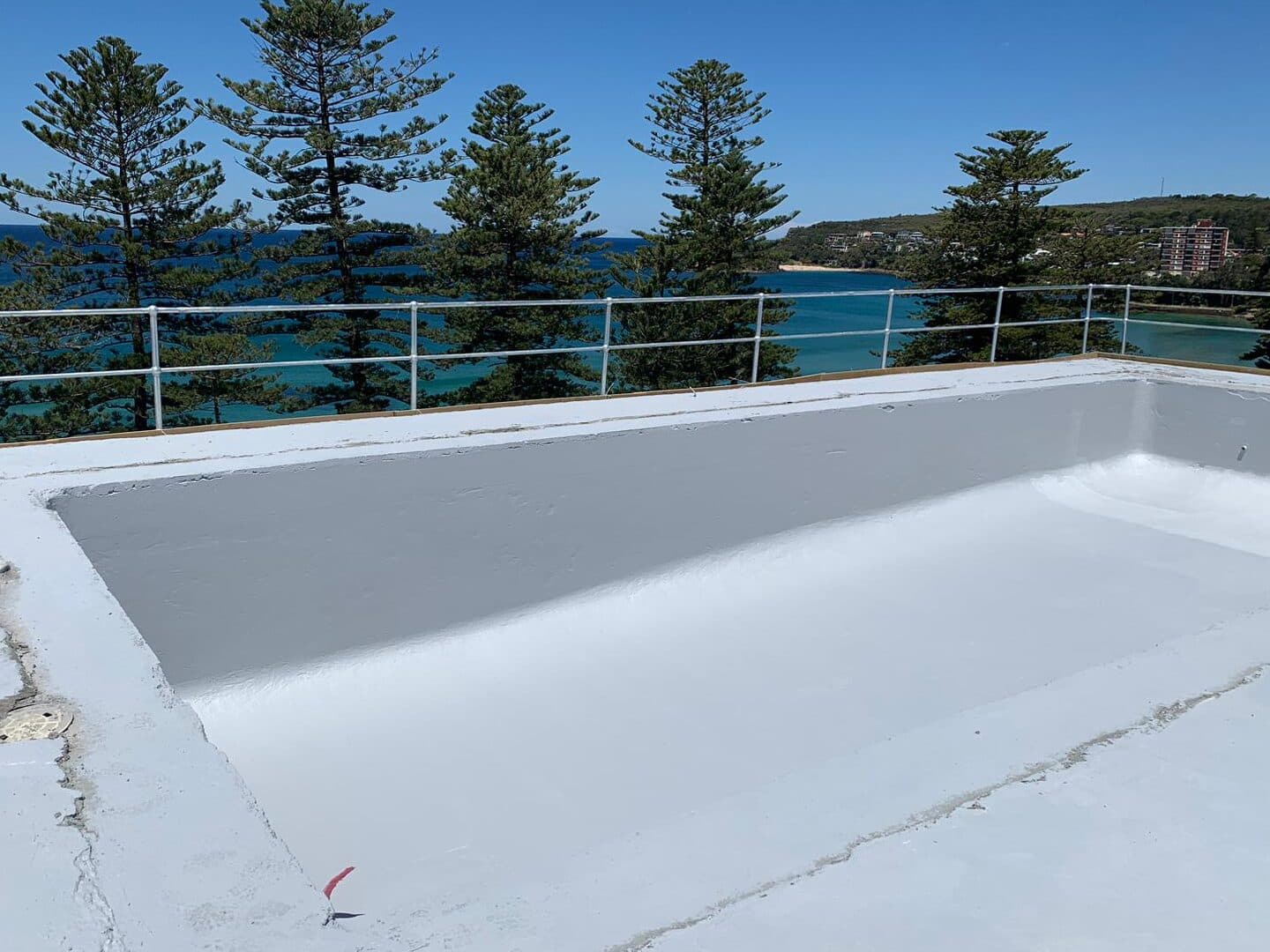
 Finished look
- A membrane made for immersion
- Fittings and penetrations sealed
- Cured before the pool is filled
Get a free quote
Pool, pond and water tank waterproofing
Add photos if you can. We usually reply within one business day.
NSW contractor licence 260823C
Our service
What pool waterproofing includes
Preparing the shell
Cleaning, grinding and repairing cracks and honeycombing so the membrane bonds to sound concrete.
Fittings and penetrations
Skimmers, returns, lights and steps sealed into the membrane: the usual places a pool leaks.
A membrane made for immersion
A system made to sit permanently under water and in pool chemicals, applied in coats to the full height of the shell.
Cured before filling
Left to cure fully before the finish goes on and the pool is filled.
Signs
Is it the shell or the plumbing?
Losing water in still weather
Stand a bucket of pool water on the step and mark both levels. If the pool drops noticeably more than the bucket over a day, it’s leaking.
The level stops at a fitting
If the water drops and then holds at the skimmer or a light, the leak is probably around that fitting.
Loss only when the pump runs
That points to the pressure side of the pool plumbing, which is a pool plumber’s job before it’s a waterproofer’s.
Damp below a rooftop pool
Staining under a rooftop pool means water is already through the shell, and the slab stays wet for as long as the leak runs.
The build-up
Inside a concrete pool wall
A tiled concrete pool shell, with the membrane on the water side.
The finish the water touches.
Suited to pools and laid over the cured membrane.
Made for permanent immersion, applied to the full height of the shell.
Fabric bedded into the membrane where it is most likely to be stressed.
Prepares the surface for the membrane.
Trues up the shape so the layers above go on evenly.
Cracks and honeycombing repaired first.
Diagram of a typical job, not to scale. Select a layer to see what it does.
Step by step
How the job runs
- 1
Photos and a quote
Send photos of the pool and how fast it loses water. We usually reply within one business day.
- 2
Shell or plumbing?
The bucket test and the fittings tell a shell leak from a plumbing one; a pressure-side leak goes to a pool plumber first.
- 3
Shell prepared
The shell is cleaned and ground back, and cracks and honeycombing repaired so the membrane bonds to sound concrete.
- 4
Fittings and membrane
Skimmers, returns, lights and steps are sealed into a membrane made for immersion, applied to the full height of the shell.
- 5
Cured, then finished
The membrane cures fully before the tiler lays the finish and the pool is filled.
Typical prices
What pool, pond and water tank waterproofing costs
A pool retile with a new membrane typically runs $15,000–$35,000 in NSW, with the tiles laid by a licensed tiler. The waterproofing on its own depends on the size, access and repairs to the shell, so we price it from photos or a visit. Quotes are free.
Pool retiling costs: our guideWhy choose us
Licensed, insured and backed in writing
A licensed waterproofer who does the job once and does it properly, with the insurance, paperwork and warranty to back it.
Check licence 260823C on the NSW registerLicence 260823C
NSW Waterproofing Technician since 2013, current to 10 July 2028.
$20m insured
Public liability cover on every job, big or small.
Statutory warranties
On home building work in NSW: six years for major defects, two for others.
Tested before it’s covered
Showers, bathrooms, balconies and flat roofs flood tested, with a waterproofing certificate.
Job photos
Our work on this service
Photos from our own jobs.
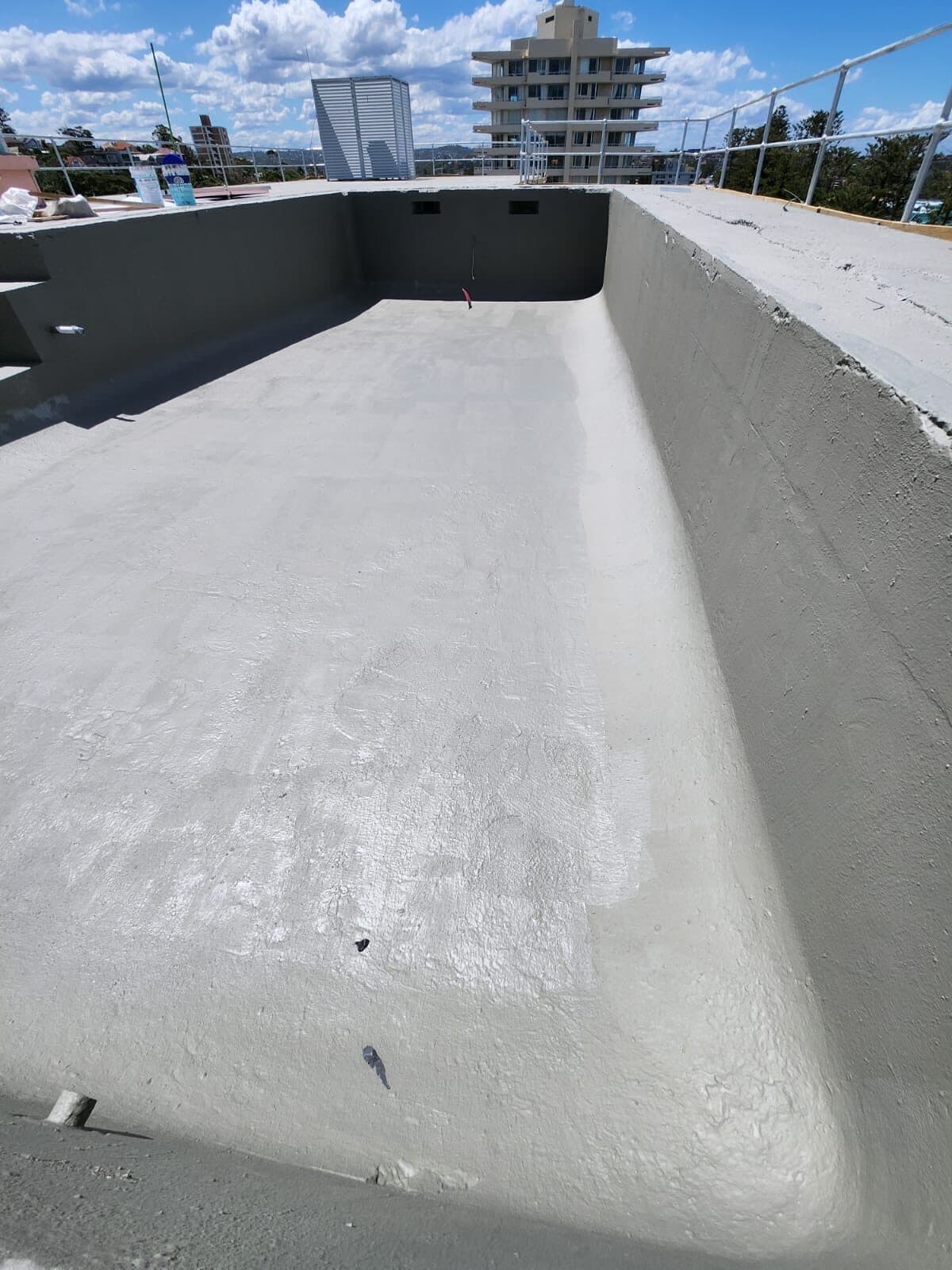
The base coat going on a rooftop pool shell
Before you book
Details and questions
Still not sure?
Send a few photos of the job and the answer comes back with your free written quote.
Send photos for a quoteCall 0451 662 300More about this work
A pool, pond or tank works the opposite way to a roof. The water is on the inside, pressing on the shell all the time, and the membrane sits between that water and the concrete. Shells shrink and crack and their joints move, so the membrane has to stay bonded under permanent immersion and pool chemicals while the structure is filled, emptied and filled again.
In-ground pools are waterproofed on the inside face before the finish goes on. Rooftop and suspended pools need even more care, because a leak goes straight into the apartments or car park below. The membrane is detailed around every skimmer box, return, light niche and step, and where the pool meets the deck.
Tiles, render or another pool finish go on as a separate stage, after the membrane has cured.
Ponds and water features
Ponds and water features are often built in concrete or block and waterproofed like a small pool. Where fish or plants live in the water, the membrane and any coating have to be suitable for them once cured, so the product is chosen with that in mind.
A pond built against a house wall or over a slab needs the same care as a planter box. The membrane runs up every face to above the water line, and the wall it sits against is protected as well.
Concrete water tanks
A concrete tank holding water for drinking needs a lining that won’t affect the water. AS/NZS 4020:2018 sets out how products for contact with drinking water are tested, so a drinking-water tank should be lined only with a product tested to it. Tanks for garden or toilet use have a wider choice.
Before lining, the tank is drained, cleaned and dried back, and its cracks and joints are repaired, because the lining has to bond to sound concrete to stay on under water.
Why do pool quotes differ?
Whether the leak is in the shell or the plumbing, and what the quote covers. Compare whether the fittings and the full-height membrane are included. The tiling is quoted separately by a licensed tiler.
Do you do the tiling too?
The tiles are laid by a licensed tiler. We repair and waterproof the shell first, and tell the tiler when the membrane has cured and is ready to tile over.
Does a new concrete pool need a membrane if the concrete is good?
Concrete alone isn’t watertight over the long term: it shrinks, cracks and moves at its joints. A membrane keeps water out of the shell and away from the steel inside it, and on a rooftop pool it’s what stands between the pool and the building below.
How long before the pool can be filled?
Once the membrane and the finish over it have fully cured, as the manufacturer specifies. Filling too early can blister the membrane and lift tiles, so it’s worth the wait.
Related
Keep reading
Areas we cover
Our work on the NSW licence register
Standards and rules referred to on this page (1)
- 1.Standards Australia: AS/NZS 4020:2018 Testing of products for use in contact with drinking water (checked 12 October 2026)