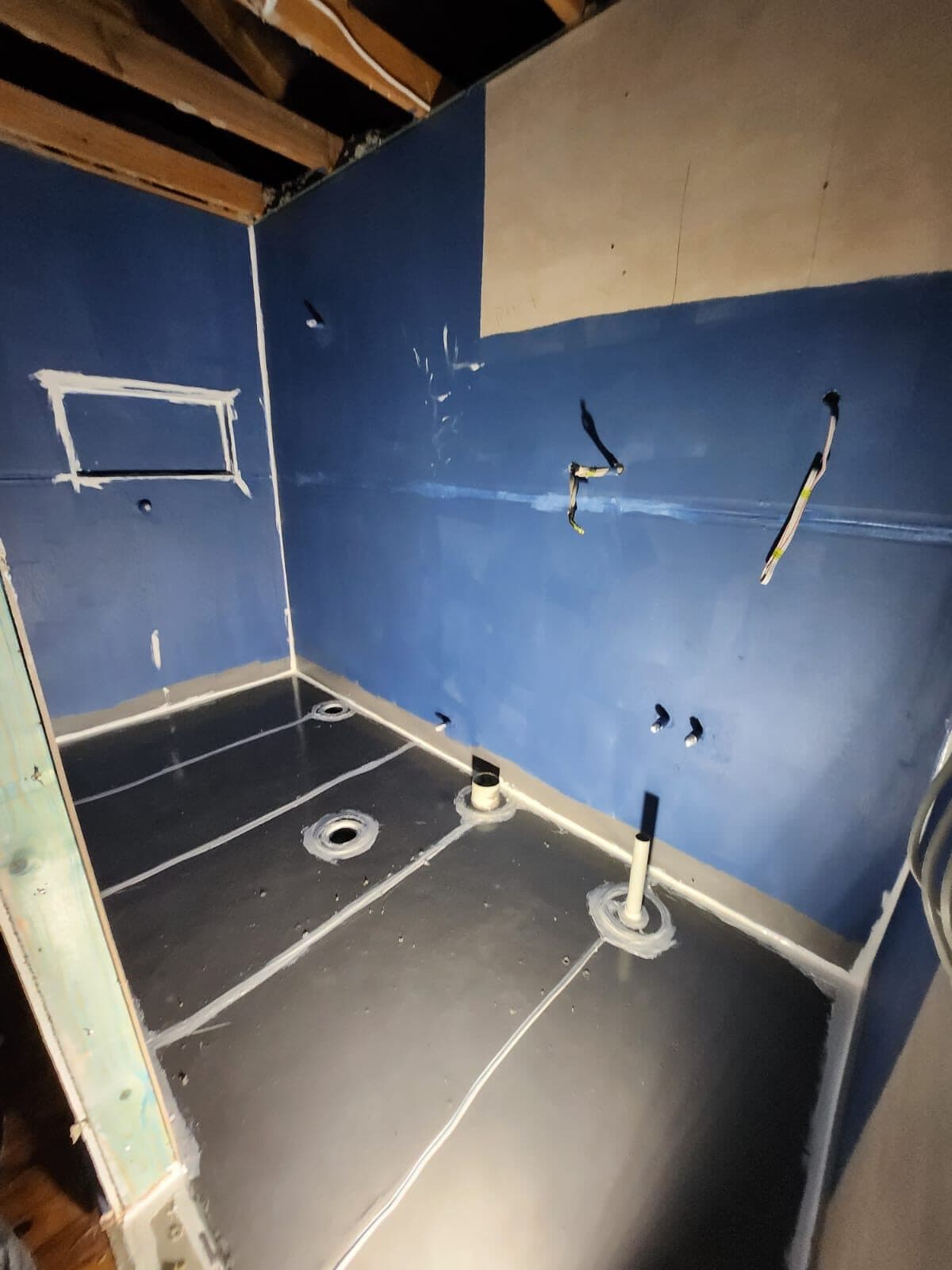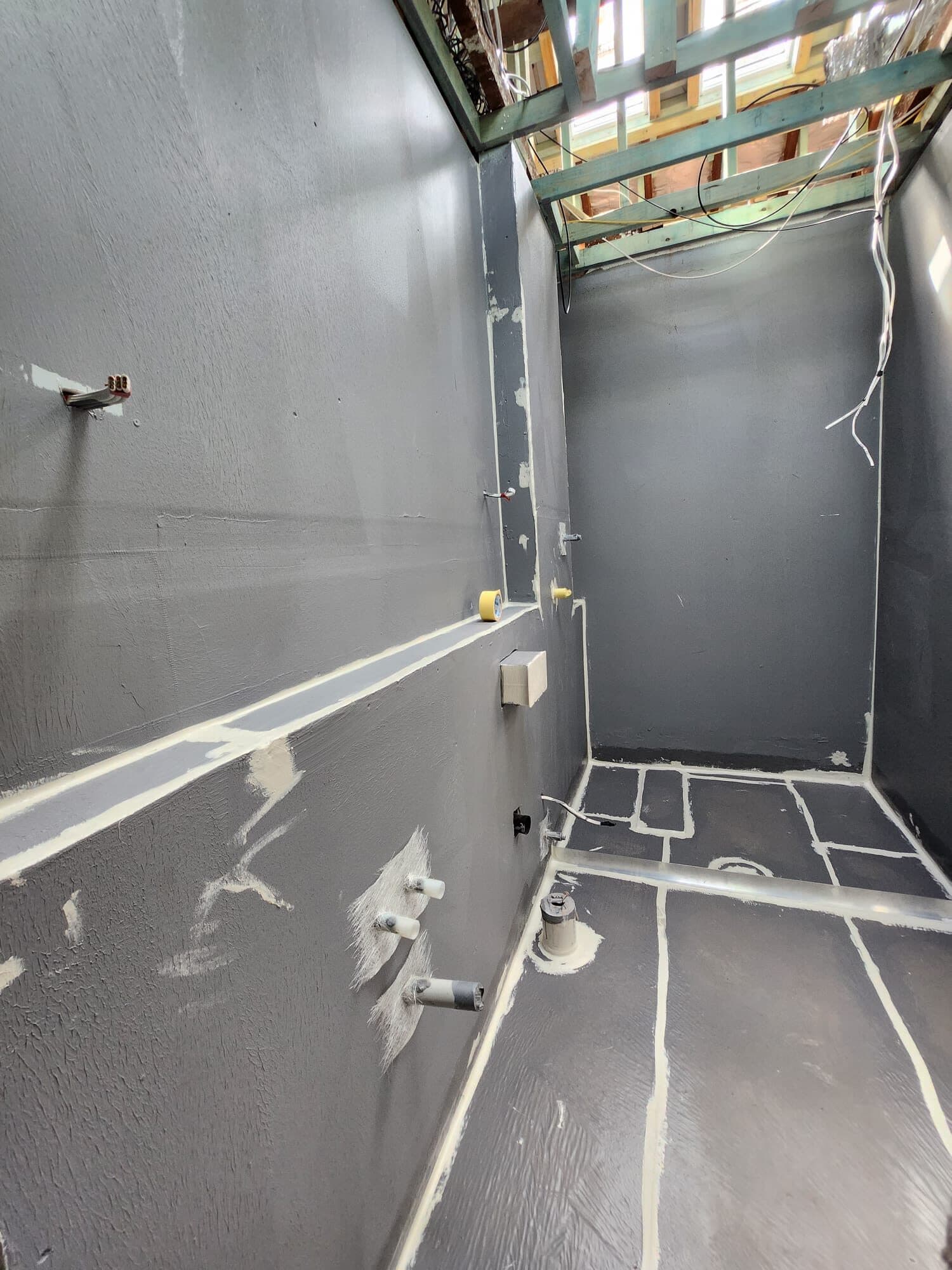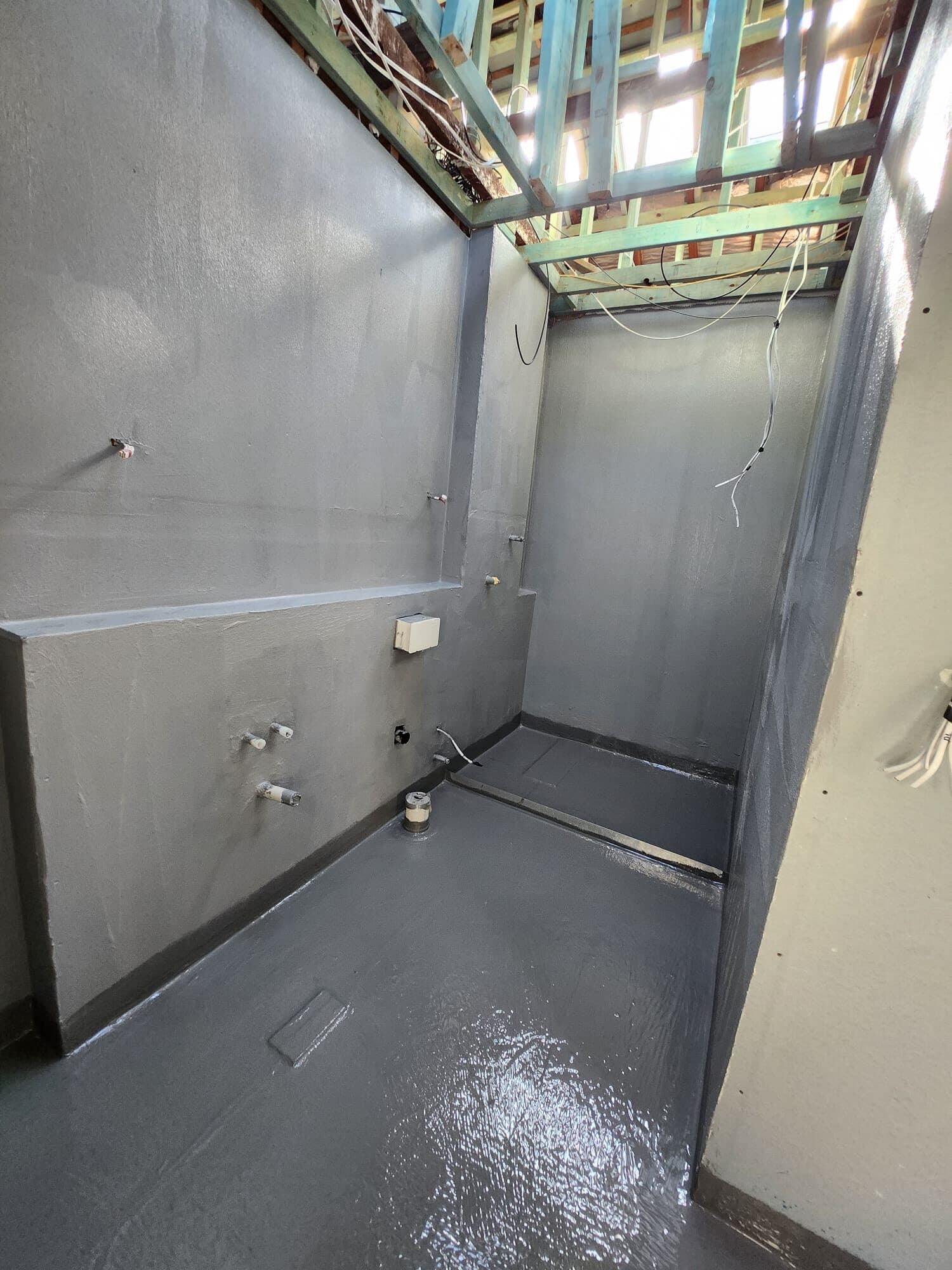
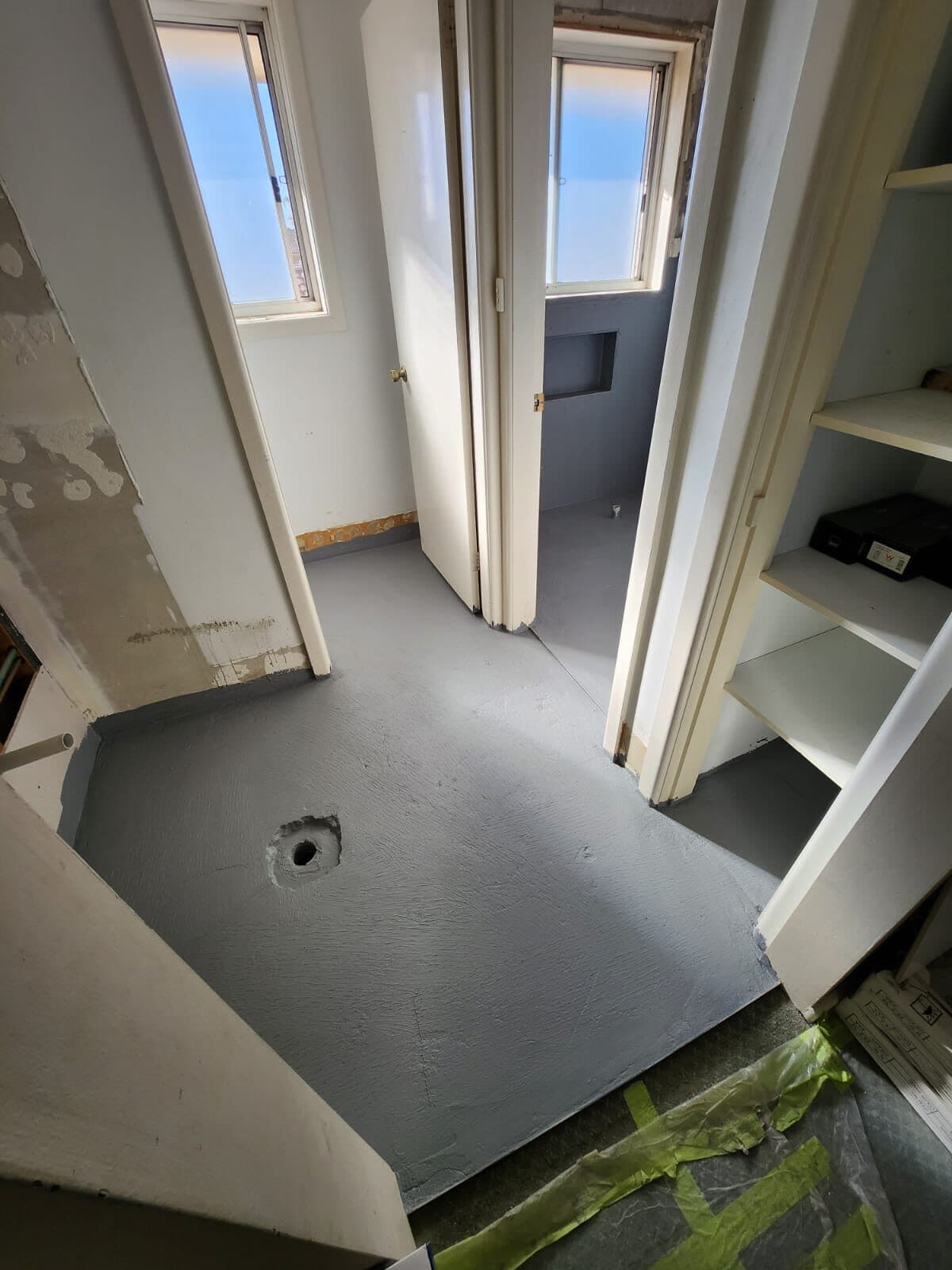
Yes, but less than a shower. In a NSW house, the National Construction Code asks for the laundry floor to be water resistant, the junction between the walls and the floor to be water resistant, and the wall beside a laundry tub to be water resistant where the tub sits within 75 mm of it (ABCB Housing Provisions 10.2.5, checked 3 November 2026). A full membrane is required only in some cases, such as a laundry on a timber floor, but it is often worth having anyway. Our bathroom, shower and laundry waterproofing page covers the work itself.
Laundry waterproofing requirements at a glance
| Where | What the code asks |
|---|---|
| Floor | Water resistant |
| Wall and floor junction | Water resistant (flashing leg at least 40 mm) |
| Wall beside a tub within 75 mm | Water resistant to 150 mm above the tub |
| Tub fixed to the wall | Waterproof junction |
| Tap and spout penetrations | Waterproof |
| Floor waste | Not required; falls of 1:80 to 1:50 if one is fitted |
| Timber or particleboard floor | Best treated as waterproof |
| Apartment laundry over another unit | Floor waste required; floor, junctions and penetrations waterproof |
What does the code require in a house laundry?
The rules for laundries are in clause 10.2.5 of the ABCB Housing Provisions, the part of NCC 2022 that sets out wet-area waterproofing for houses. In plain terms:
- The floor: water resistant across the whole room.
- The wall and floor junction: water resistant all the way around. Where a flashing is used, its horizontal leg must be at least 40 mm.
- Beside a laundry tub: where the tub is within 75 mm of a wall, the wall must be water resistant to at least 150 mm above the tub for the length of the tub. Where the tub is fixed to the wall, that junction must be waterproof.
- Taps and spouts: where they pass through a surface that has to be waterproof or water resistant, the penetration must be waterproof.
There is no rule for how far up the walls a laundry must be treated beyond the tub, because a laundry, unlike a shower, is not expected to have water running down its walls.
Does AS 3740 apply to laundries?
Yes. AS 3740:2021, Waterproofing of domestic wet areas, covers laundries along with showers, bathrooms and toilets. For a house, the code gives two ways to comply: follow Part 10.2 of the Housing Provisions in full, or follow its first clauses together with AS 3740 (ABCB NCC Navigator, waterproofing houses, checked 3 November 2026). Either way, the laundry minimums above are the same, and a membrane counts as waterproof when it complies with AS/NZS 4858. Our standards guide explains AS 3740 and the rest of the wet-area rules.
What is the difference between water resistant and waterproof?
They are two different levels in the code, and the difference decides what goes under your tiles. "Waterproof" means the area does not let moisture through at all, which in practice means a membrane. "Water resistant" is a lower level: the material has to restrict moisture moving through it and not break down when it gets wet, so a properly sealed substrate and junctions can meet it without a full membrane.
That is why a quote for a laundry should say which one you are getting. A quote that says "waterproof the laundry" might mean a membrane across the floor and up the walls, or only sealed junctions.
Does a laundry on a timber floor need a membrane?
For a bathroom, yes: the code says that outside the shower, a timber, plywood or particleboard floor must be waterproof across the whole room, while concrete and fibre-cement floors only need to be water resistant (Housing Provisions 10.2.3, checked 3 November 2026). The laundry clause does not repeat that distinction, but timber-based floors swell, rot and move when they get wet, and a laundry floor gets wet. On a timber or particleboard floor, the safe reading is to treat the whole laundry floor as waterproof, with the membrane turned up at the walls and sealed across the doorway. If your laundry is upstairs or over a timber subfloor, ask for that to be written into the quote.
Does a laundry need a floor waste?
Not in a house. The code doesn't make you install one; it says that where a floor waste is installed, the floor must fall to it at no less than 1:80 and no more than 1:50 (Housing Provisions 10.2.12). The ABCB explains the falls rule in its NCC Navigator guide to waterproofing houses (checked 3 November 2026).
A floor waste is still worth considering. When a machine hose bursts, a waste gives the water somewhere to go other than under the door or into the wall. If you have one, the membrane or water-resistant treatment has to be sealed into it, the same as in a bathroom.
What about a laundry in an apartment?
Apartment buildings come under Volume One of the NCC, not the Housing Provisions, and the rules are stricter in one way that matters. A bathroom or laundry that sits above another unit or a public space must have a floor waste (NCC 2022 Volume One, F2D4, checked 3 November 2026). Where a floor waste is required, the floor, the wall and floor junctions and the penetrations must be waterproof (NCC 2022 Volume One, Specification 26, checked 3 November 2026).
In practice, then, an apartment laundry over a neighbour usually needs a full floor membrane. Renovating one in a strata building also needs the owners corporation's approval before any tiles come up: see renovating a bathroom or laundry in a strata unit.
When is it worth going further than the code?
The code sets a minimum for the building, not for the floor coverings or the room below. A full floor membrane with an upturn at the walls is worth having when:
- the laundry is upstairs, or over a ceiling you would rather not replace
- the floor is timber, plywood or particleboard
- the laundry is in a cupboard or hallway, where water escaping runs straight into carpet or timber flooring
- the machine sits on a raised platform or in a cabinet, where a leak can go unnoticed for weeks.
The membrane goes down while the floor is open anyway, which is the only time it can be added without lifting new tiles.
How is a laundry waterproofed?
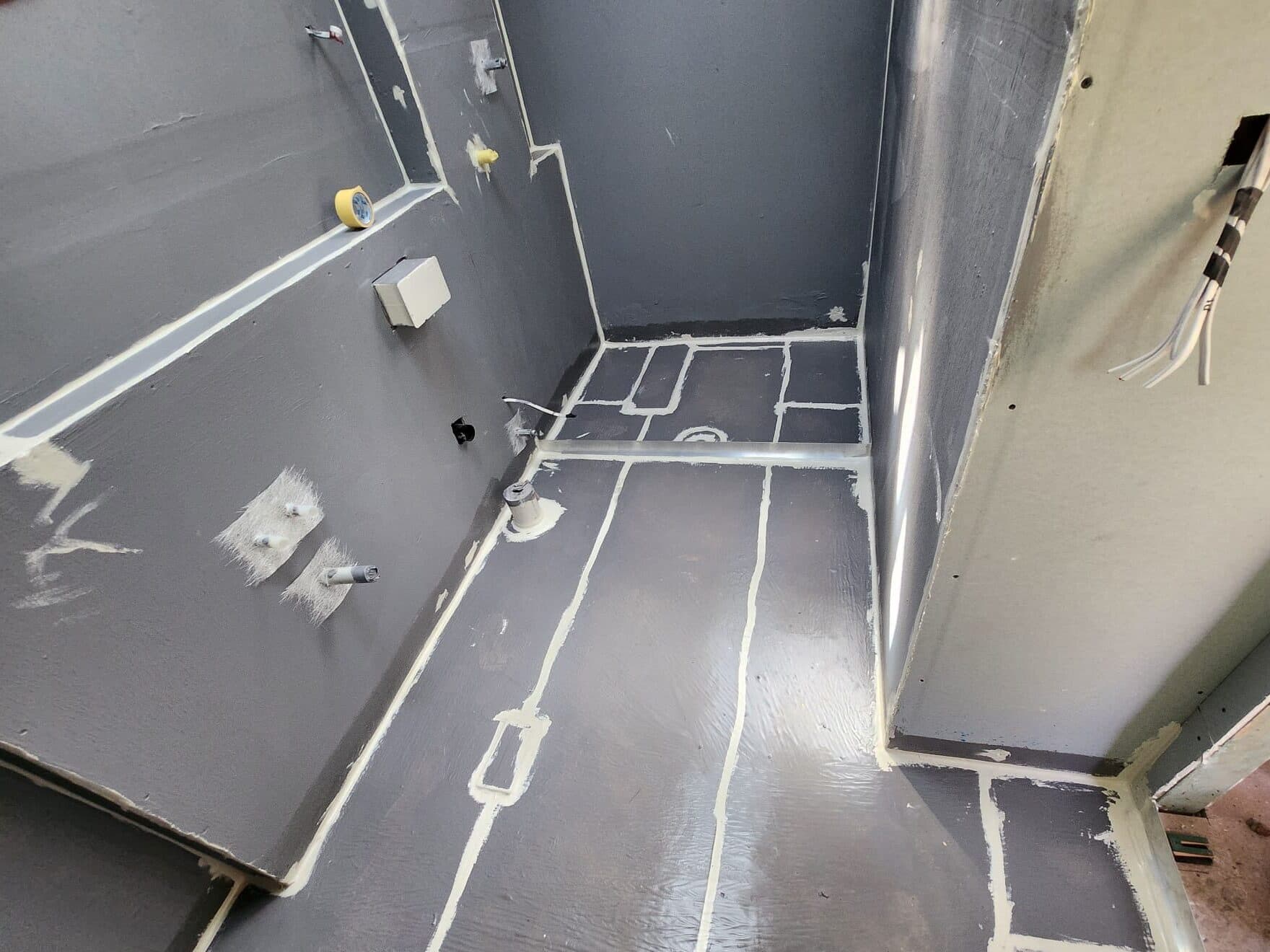
A full laundry membrane follows the same steps as a bathroom floor, and most of the work is in the details:
- Strip and prepare. Old tiles, bed and any failed membrane come out, and the surface is made clean, dust free and free of indentations and imperfections (Housing Provisions 10.2.22).
- Prime. The primer suits the membrane system and the substrate.
- Bond breakers at every junction. Where the walls meet the floor, and at any movement joint, a bond breaker lets the membrane flex instead of splitting when the building moves (10.2.27).
- Seal the waste. On a concrete floor, the membrane is terminated into a drainage flange at the floor waste (10.2.29).
- Membrane coats, with an upturn. The membrane goes on in the coats the product needs, turned up the walls and sealed across the doorway, then left to cure.
- Test, then tile. Where it matters, the floor is flood tested before the tiles go down, and the result goes on the waterproofing certificate.
Do you need a licensed waterproofer for a laundry?
In NSW, waterproofing work valued at more than $5,000, including labour, materials and GST, must be done by someone licensed for it (NSW Government, waterproofing work, checked 3 November 2026). Our standards guide covers the licence rule and the contract that goes with it. Whoever does the work, ask for a waterproofing certificate naming the laundry, the membrane and the standard; our guide to waterproofing certificates explains what it should say.
Getting a laundry quote
Send us a photo of the whole laundry, one of the floor and the tub, and tell us whether the floor is concrete or timber, whether the laundry is upstairs, and whether it is in a house or a unit. Send them through our enquiry form, or call 0451 662 300. For typical prices on bathrooms and showers, see how much waterproofing costs in Sydney.