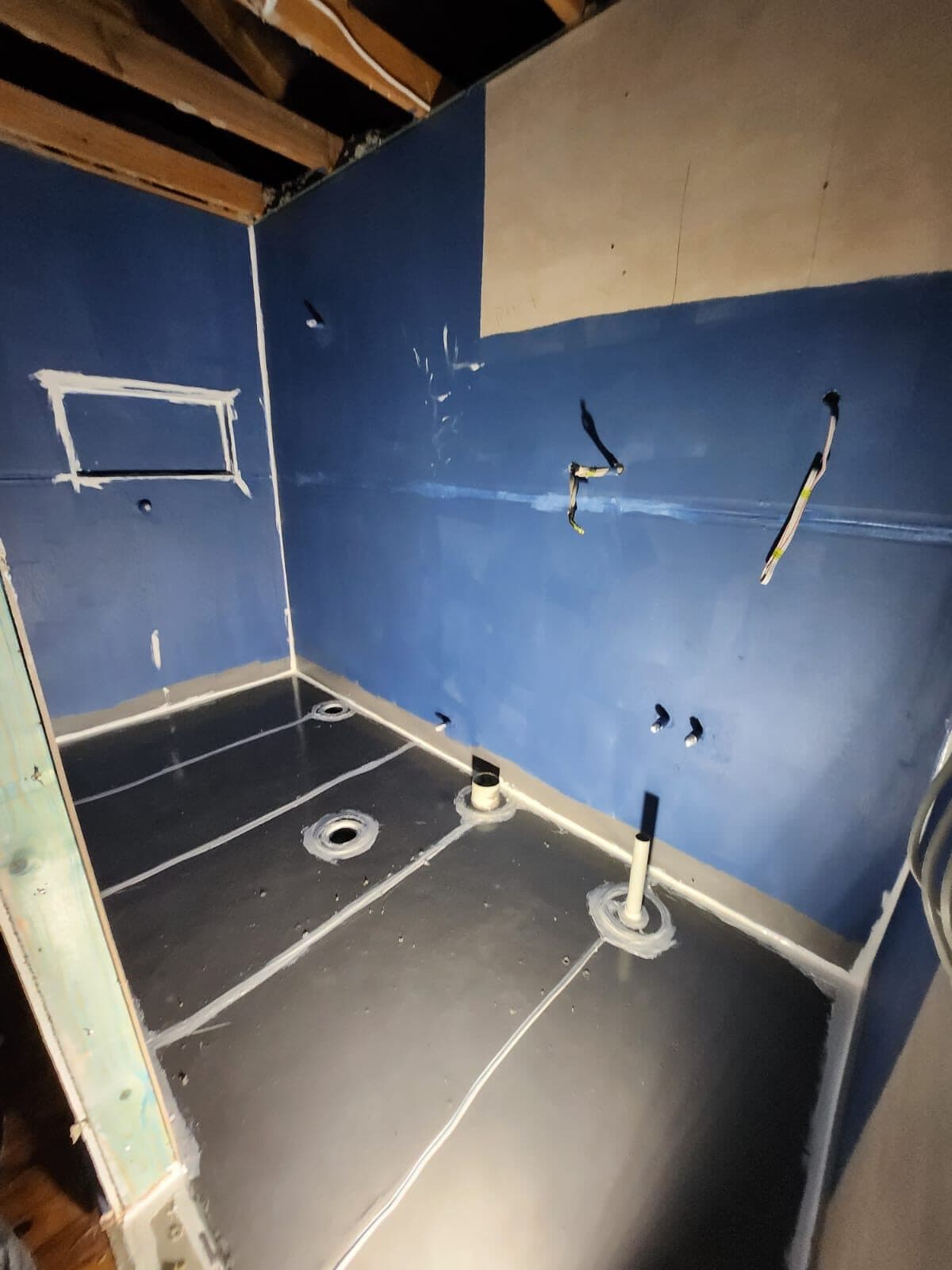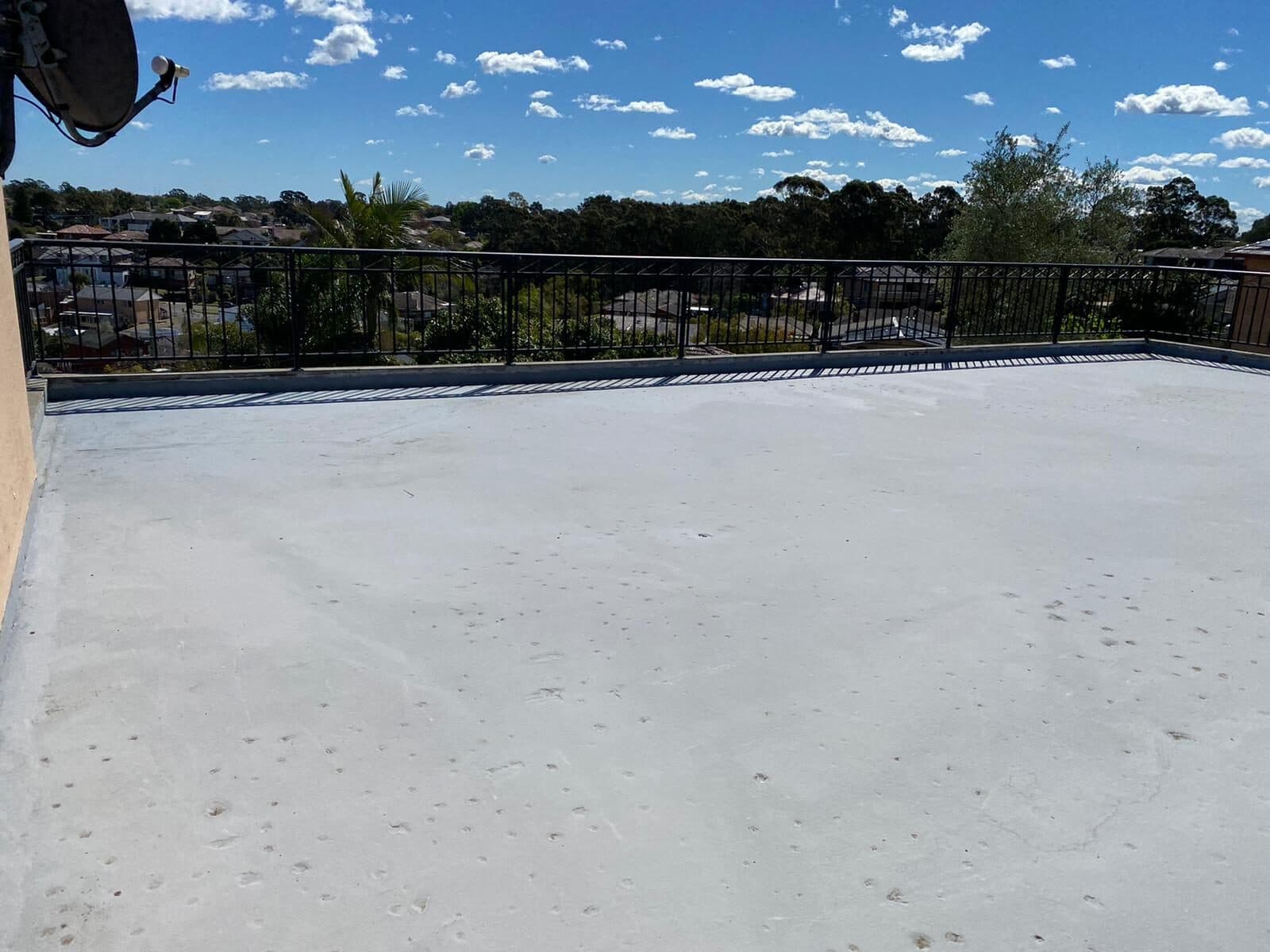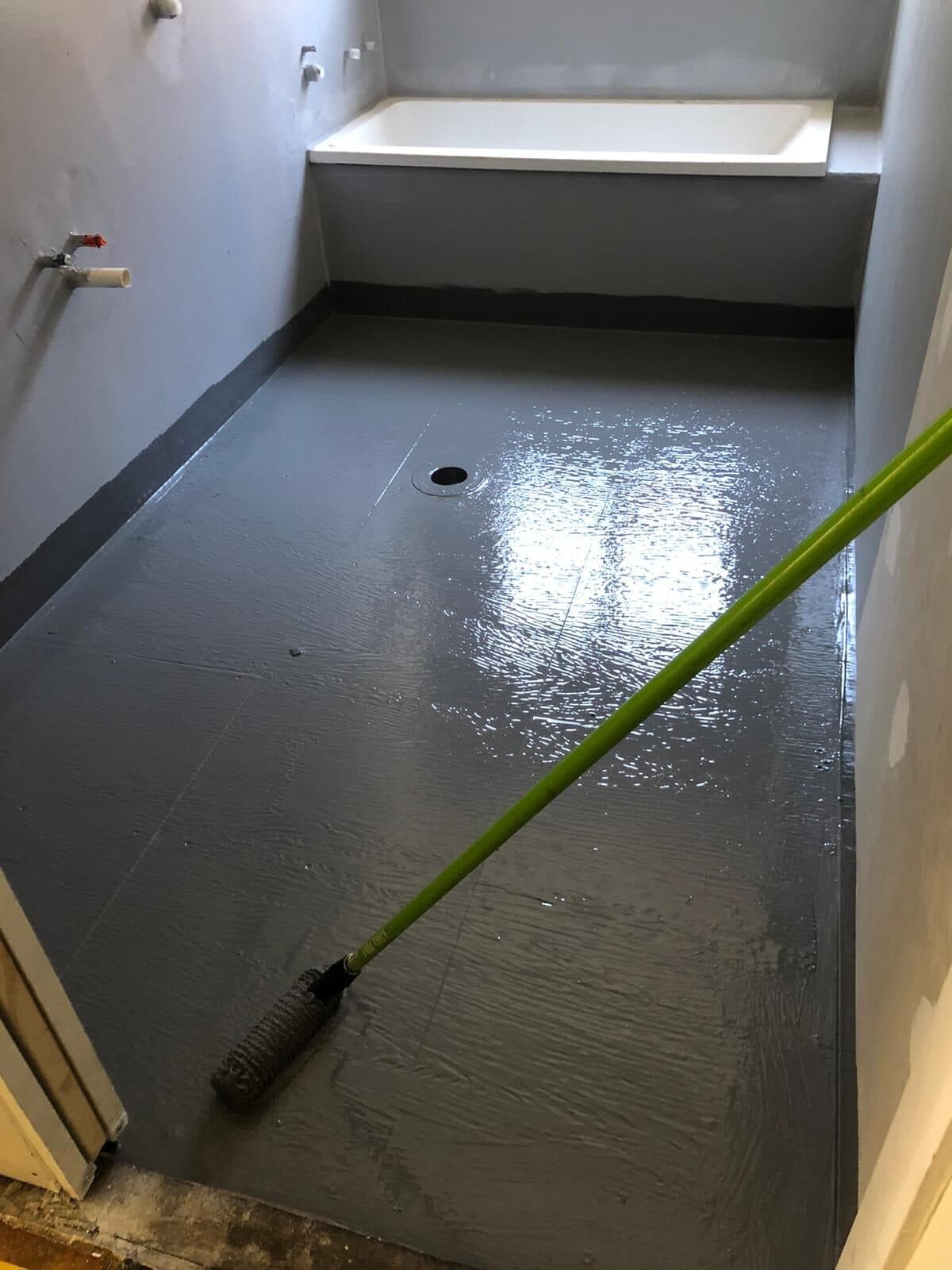
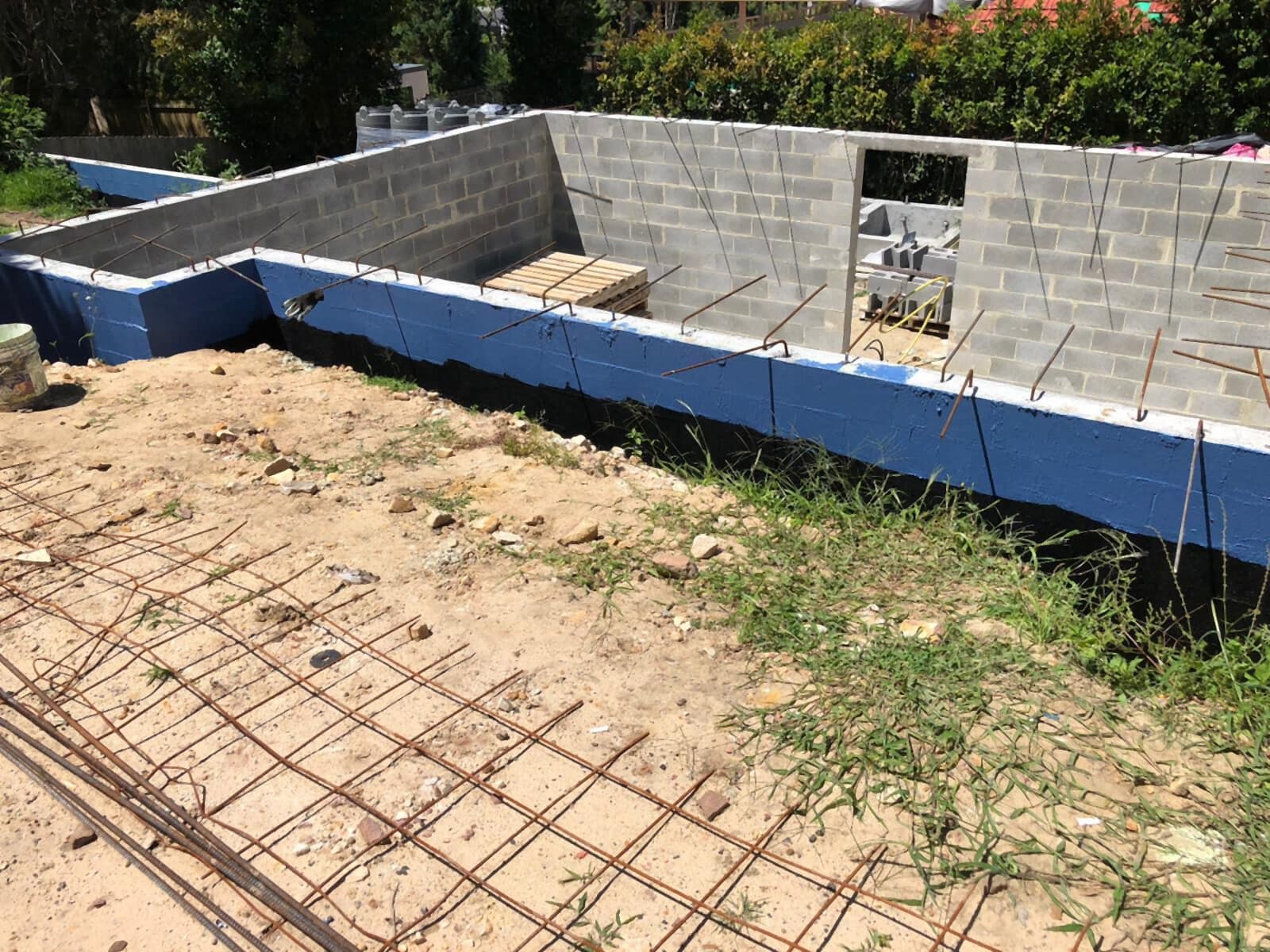

Positive-side waterproofing goes on the face of a wall or slab that the water comes from, such as the outside of a basement wall before the soil is backfilled against it. Negative-side waterproofing goes on the opposite face, the one you are keeping dry, and has to hold against water pushing it off from behind.
Waterproofing from the positive side is the better choice where that face can be reached; negative-side work is for walls and pits whose outside is buried, built over or on the boundary, and it keeps water out of the room rather than out of the concrete. Our negative-side waterproofing, basement waterproofing and lift pit waterproofing pages cover the work itself.
What does positive-side waterproofing mean?
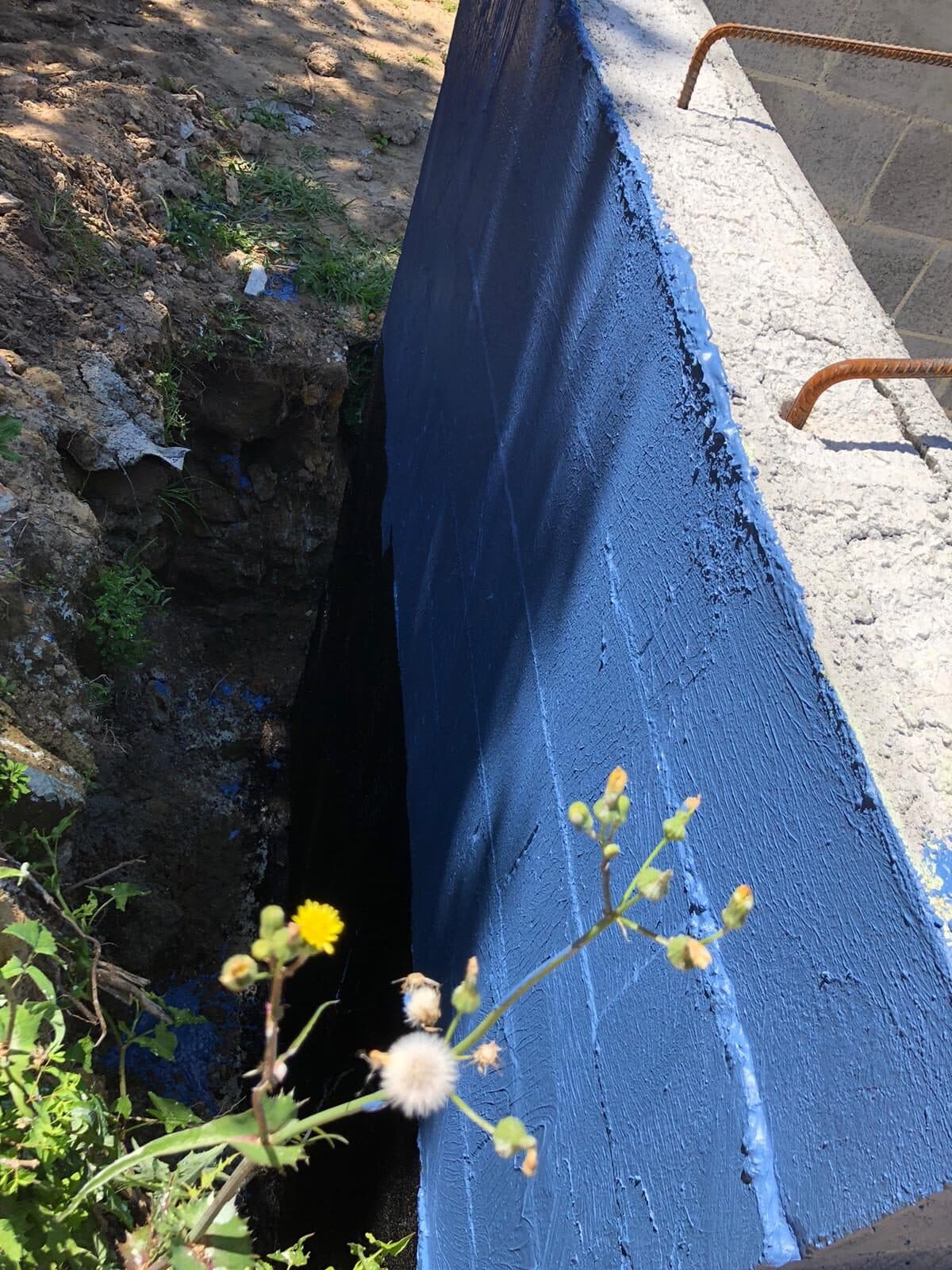
The positive side is the face that meets the water. On a basement wall, it is the outside face against the soil; on a water tank or pool, it is the inside face holding the water. A membrane on the positive side has the water pressing it onto the wall, so the pressure helps hold it in place, and the wall behind it stays dry.
On a new building, positive-side waterproofing below ground is usually called tanking. It goes on the outside of footings and walls before they are backfilled, and it is often finished with a protection board so the backfill does not damage it. Once the soil is in, that face cannot be reached again without digging it out.
What does negative-side waterproofing mean?
The negative side is the face away from the water: the inside of a basement wall, the inside of a lift pit, the room side of a retaining wall. Water arrives through the wall from behind, so anything applied to this face is being pushed off by the water, not pressed on. Most membranes made for showers, balconies and roofs are designed for water landing on top of them. They do not bond strongly enough to stay on against water pressure from behind, which is why a negative-side system is a different kind of product.
The result is different too. A positive-side membrane keeps the wall dry. A negative-side system keeps the room dry while the wall itself stays wet.
When can only the negative side be reached?
Mostly when the building is already there:
- Existing basements and garages, where the outside of the walls is under soil, a driveway, a garden or a neighbour's paving.
- Walls built to the boundary, where the outside face sits against a neighbour's footing or wall and there is no room to dig.
- Lift pits, which sit below the lowest floor, are surrounded by soil and slab on every side, and can only be reached from inside the pit.
- Retaining walls with a building, a pool or a road behind them.
- Slabs on ground, where the underside can never be reached once the concrete is poured.
Digging out the soil to reach the positive side is sometimes possible, but on a strata building or a wall on the boundary it can mean excavating next to someone else's footings. Where the dig would cost more than the room is worth, or is not possible at all, negative-side work is the practical option.
What methods are used on the negative side?
Crystalline treatments are cement-based slurries containing chemicals that react with moisture in the concrete to form crystals in its pores and fine cracks, so they waterproof within the concrete rather than as a layer on top. One manufacturer's data sheet, for Xypex Concentrate, says the product can be applied to the positive or the negative side, resists high water pressure, and seals static cracks up to 0.5 mm. The same data sheet requires the concrete to be saturated, clean and opened up by sandblasting or water blasting before application, and cracks wider than 0.5 mm, defective concrete and faulty construction joints to be repaired first (Xypex Concentrate technical data sheet, February 2026, checked 28 October 2026). Crystalline systems work in concrete; they rely on its chemistry.
Cementitious coatings are cement-based coatings, many with polymers added, brushed or trowelled onto concrete or solid masonry in two or more coats. They bond into the surface rather than sitting on it. Not every cementitious coating is rated for water pressing from behind: check that the data sheet for the product on your quote says it is for negative-side or negative-pressure use.
Injection fills cracks and leaking joints from inside with a resin. It is used to stop running water before a coating goes on, because a coating cannot cure while water flows through it, and to deal with individual cracks and construction joints.
Drained cavity systems take a different approach. Instead of stopping the water at the wall, a dimpled membrane or inner wall collects it and carries it to a drain or sump, where a pump takes it away. This manages water rather than holding it back, and it depends on the drain and pump working.
On most jobs, more than one is used: injection at the active leaks and joints, then a crystalline or cementitious system over the whole wall, then a render or topping to protect it.
What are the limits of negative-side waterproofing?
The wall stays wet. A negative-side system stops water reaching the room. It does not stop water reaching the concrete, or the steel reinforcement in it, from outside. Where the concrete is already cracking and spalling from rusting steel, that is a structural repair first.
It cannot bridge moving cracks. Crystalline and cementitious systems are rigid. A crack that opens and closes with the seasons, or with ground movement, will crack the coating too. Moving cracks need injection with a flexible resin, or structural advice, before any coating.
The surface has to suit it. These systems bond into concrete or solid masonry. They do not go onto plasterboard, timber, painted render or old coatings, so paint and earlier treatments have to be ground back first.
Joints are the weak points. The junction between wall and floor, construction joints and penetrations such as pipes are where negative-side work most often fails. They are cut out and filled, or injected, before the main coats.
It is not a fix for rising damp. Damp rising up an above-ground brick wall is a different problem, usually dealt with by a damp-proof course.
Is positive-side waterproofing always better?
Where it can be done, it is usually the better result, because it keeps the structure dry. On a new building, the time to do it is before backfill, while every face can still be reached. Our guide to how long waterproofing lasts covers the membrane types used for tanking.
On an existing building, the choice is usually between negative-side work and excavation. The questions that decide it are whether the outside can be reached at all, what is on the other side, whether the wall is concrete or masonry, whether its cracks are moving, and whether the room needs to be fully dry or only free of running water.
What applies to basements and lift pits in apartment buildings?
In NSW, a contractor licence is needed for residential waterproofing valued at more than $5,000 in labour and materials, including GST (NSW Government, waterproofing work, checked 28 October 2026).
In an apartment building, remedial waterproofing also comes under the Design and Building Practitioners scheme unless it is an emergency or one of the narrow exclusions applies. A registered design practitioner prepares the design for the work, and the building practitioner lodges it, with the compliance declarations, on the NSW Planning Portal (NSW Government, remedial building work in regulated buildings, checked 28 October 2026). For an owners corporation with a leaking basement car park or lift pit, that means the design comes before the quotes for the work can be compared like for like. Our waterproofing certificates guide covers the paperwork that follows.